Overview

Certifying Body

OSHAA

Total Credits

155-HOURS

Evaluation

Assignments Based

Course Category

General Industry Safety

Learning Mood

Online

Qualification Structure

To achieve the OSHA 155-Hour OSH Professional;

Candidates must complete the following 12 Mandatory Units,

Mandatory Units

  • Introduction to OSHA and Occupational Safety Standards (10 Hours)
  • Hazard Identification and Risk Assessment (10 Hours)
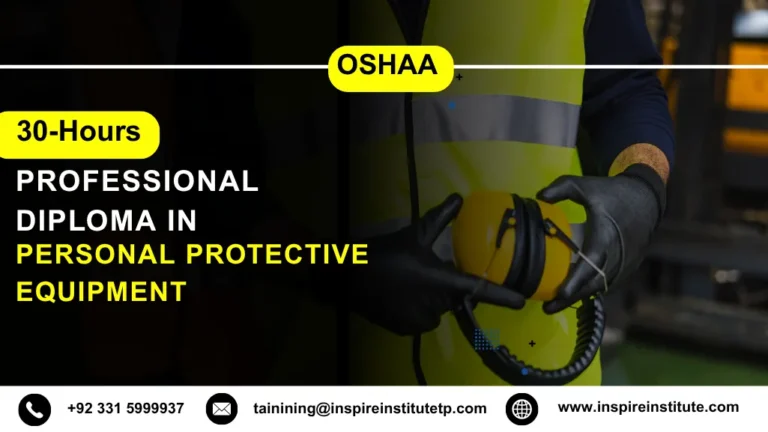
  • Personal Protective Equipment (PPE) (10 Hours)
  • Fire Safety and Emergency Response (10 Hours)
  • Electrical Safety and Lockout/Tagout (LOTO) Procedures (15 Hours)
  • Chemical Safety and Hazard Communication (HAZCOM) (15 Hours)
  • Ergonomics and Prevention of Musculoskeletal Disorders (MSDs) (15 Hours)
  • Machine Guarding and Equipment Safety (10 Hours)
  • Incident Reporting, Investigation, and Root Cause Analysis (15 Hours)
  • Workplace Environmental Safety and Hazardous Waste Management (15 Hours)
  • Safety Auditing and Compliance Inspections (15 Hours)
  • Creating a Safety Culture and Employee Training (15 Hours)

Upon the OSHA 155-Hour OSH Professional, learners will be able to

  • Introduction to Occupational Safety and Health (OSH)
  • Understand the foundational principles of occupational safety and health and the global importance of OSHA regulations.
  • Gain knowledge of regulatory frameworks, workplace compliance requirements, and industry-specific safety standards.
  • Develop awareness of safety responsibilities and legal obligations in various industrial settings.
  • Hazard Identification and Risk Assessment (10 Hours)
  • Acquire the ability to systematically identify workplace hazards across multiple environments.
  • Learn to conduct comprehensive risk assessments and prioritize risks based on severity and likelihood.
  • Develop strategies for mitigating hazards to minimize accidents and enhance safety compliance.
  • Personal Protective Equipment (PPE) (10 Hours)
  • Understand the selection, proper use, and maintenance of PPE in diverse work environments.
  • Gain skills to train employees on PPE compliance and effective safety practices.
  • Recognize the role of PPE in preventing occupational injuries and ensuring regulatory adherence.
  • Fire Safety and Emergency Response (10 Hours)
  • Learn to identify fire hazards and implement preventive measures to reduce fire risks.
  • Develop skills in emergency planning, evacuation procedures, and response coordination.
  • Gain practical knowledge of fire protection systems, extinguishers, and workplace drills.
  • Electrical Safety and Lockout/Tagout (LOTO) Procedures (15 Hours)
  • Understand electrical hazards and develop safe work practices for handling electrical systems.
  • Master Lockout/Tagout (LOTO) procedures to control hazardous energy and prevent accidents.
  • Gain competency in implementing electrical safety programs and training personnel effectively.
  • Chemical Safety and Hazard Communication (HAZCOM) (15 Hours)
  • Acquire skills to safely handle, store, and transport hazardous chemicals in compliance with OSHA standards.
  • Understand hazard communication requirements, labeling, and safety data sheets (SDS).
  • Develop the ability to train employees on chemical safety protocols and emergency response.
  • Ergonomics and Prevention of Musculoskeletal Disorders (MSDs) (15 Hours)
  • Learn to identify ergonomic risks and implement measures to prevent musculoskeletal disorders.
  • Understand workstation design, proper lifting techniques, and repetitive task management.
  • Gain skills to develop ergonomic programs that improve employee well-being and productivity.
  • Machine Guarding and Equipment Safety (10 Hours)
  • Understand the principles of machine safety and safeguarding critical equipment.
  • Acquire the ability to identify hazards associated with machinery and implement control measures.
  • Gain competency in developing and enforcing equipment safety protocols for operational compliance.
  • Incident Reporting, Investigation, and Root Cause Analysis (15 Hours)
  • Learn to document workplace incidents accurately and investigate causes effectively.
  • Develop skills to perform root cause analysis and recommend corrective actions.
  • Understand the importance of incident reporting in continuous improvement and compliance.
  • Workplace Environmental Safety and Hazardous Waste Management (15 Hours)
  • Acquire knowledge of environmental safety requirements and sustainable workplace practices.
  • Learn to manage hazardous waste in accordance with regulatory standards.
  • Develop the ability to integrate environmental protection into occupational safety programs.
  • Safety Auditing and Compliance Inspections (15 Hours)
  • Gain skills to conduct safety audits and inspections systematically and objectively.
  • Understand audit methodologies, reporting procedures, and corrective action implementation.
  • Develop competency in ensuring organizational adherence to OSHA standards and best practices.
  • Creating a Safety Culture and Employee Training (15 Hours)
  • Learn strategies to foster a proactive safety culture across the organization.
  • Gain skills in designing, implementing, and evaluating effective safety training programs.
  • Understand how leadership, communication, and employee engagement enhance workplace safety.
Entry Requirements

Entry Requirements

  • Participants must be at least 18 years old at the time of enrollment.
  • A minimum of secondary education or equivalent is required.
  • Prior work experience in construction, industry, or safety-related roles is strongly encouraged.
  • Participants must possess intermediate to advanced English proficiency to understand complex training materials, safety regulations, and assessments.

What You Need to Know

This advanced program is designed for safety officers, supervisors, managers, and professionals seeking to build expertise in occupational safety and health management.

The OSHA 155-Hour OSH Professional Course provides comprehensive training in hazard management, compliance, and leadership skills, preparing you to oversee workplace safety at a professional level.

  • Comprehensive understanding of occupational safety and health standards
  • Expertise in hazard identification, risk assessment, and accident prevention
  • Ability to design and implement effective safety programs
  • Improved leadership and safety management skills

Graduates can pursue senior roles such as safety manager, compliance officer, occupational health specialist, or safety consultant in construction, manufacturing, and industrial sectors.

Learners can advance to specialized safety certifications, postgraduate studies in occupational health and safety, or leadership positions in corporate safety management.

Yes, OSHA training is widely respected and recognized worldwide, making this qualification valuable for professionals seeking opportunities both locally and abroad.

Apply for This Course

Similar Posts