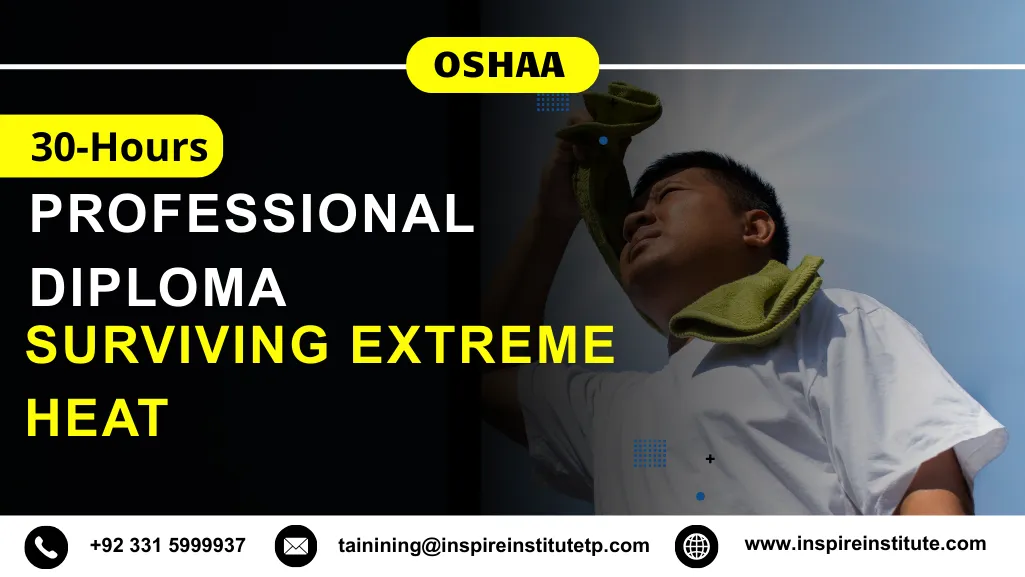
OSHAA 30-Hours Professional Diploma in Surviving Extreme Heat

Overview

Certifying Body

OSHAA

Total Credits

30 HOURS

Evaluation

Assignments Based

Course Category

Health Care Management

Learning Mood

Online

Qualification Structure

The study units below explain what learners will study and the learning outcomes they are expected to achieve.


  • Understand the definition and characteristics of extreme heat conditions
  • Identify environmental and situational factors that increase heat exposure risks
  • Recognise the importance of preparation and adaptation for survival in high temperatures
  • Explain how the human body regulates temperature in hot environments
  • Identify the physiological effects of heat stress on different body systems
  • Recognise early signs of heat strain and apply appropriate self-care measures
  • Understand the role of hydration in preventing heat-related illnesses
  • Apply effective fluid replacement techniques for different heat conditions
  • Identify foods and nutritional practices that support endurance and recovery in high heat
  • Select appropriate clothing and gear for reducing heat absorption and retention
  • Apply environmental adaptations such as shade, ventilation, and cooling methods
  • Understand the role of modern and traditional protective technologies in heat survival
  • Identify symptoms and stages of common heat-related illnesses such as heat exhaustion and heatstroke
  • Apply correct first response procedures for each condition
  • Understand when and how to seek professional medical assistance
  • Plan and schedule activities to minimise heat exposure risks
  • Use monitoring tools to assess heat risk levels before and during activity
  • Implement lifestyle and behavioural changes to improve heat resilience
  • Perform immediate first aid for heat-related emergencies
  • Apply cooling and recovery techniques for severely affected individuals
  • Coordinate emergency communication and evacuation procedures in high-heat situations
  • Recognise the mental effects of extreme heat on focus, mood, and decision-making
  • Apply stress management techniques to maintain clarity under pressure
  • Develop confidence in making quick, safe decisions in high-risk heat scenarios
  • Identify natural and improvised shelters suitable for extreme heat conditions
  • Apply water sourcing, purification, and conservation methods in remote areas
  • Use navigation and safety strategies to survive in isolated, high-temperature locations
Entry Requirements

Entry Requirements

  • Minimum age of 18 years at the time of enrollment.
  • Completion of secondary education (high school diploma or equivalent) is required.
    Candidates with higher education in occupational safety, engineering, or environmental sciences will be given preference.
  • At least 1 year of professional experience in industries such as construction, manufacturing, oil & gas, agriculture, or other fields where exposure to extreme heat is common.
  • Ability to read, write, and communicate effectively in English.

What You Need to Know

This course is ideal for safety officers, supervisors, frontline workers, and professionals in industries such as construction, oil & gas, manufacturing, agriculture, and outdoor services. Anyone working in environments with high heat exposure will benefit from this specialized training.

With global temperatures rising, extreme heat has become a serious workplace hazard. By enrolling, you gain OSHA-compliant knowledge and practical skills to prevent heat stress, protect yourself and your team, and ensure compliance with international safety standards.

  • Recognized OSHAA 30-Hours certification
  • Practical strategies for heat survival and risk management
  • Enhanced professional credibility in workplace safety
  • Improved productivity and reduced health risks in extreme conditions

Graduates can pursue roles such as Health & Safety Officer, Environmental Safety Specialist, Risk Manager, or Safety Trainer across industries where heat-related hazards are common.

Learners can advance to higher-level OSHAA diplomas, NEBOSH certifications, or specialized safety management programs, strengthening their career path in occupational health and safety.

Yes. The OSHAA 30-Hours Professional Diploma is widely recognized across industries and countries, making it a valuable credential for professionals seeking global career opportunities in safety and risk management.

Apply for This Course

Similar Posts