Overview

Certifying Body

LICQual

Total Credits

120

Evaluation

Assignments Based

Qualification Type

Non Ofqual

Learning Mood

Online

Study Units

6

Qualification #

LICQ2201290

Qualification Structure

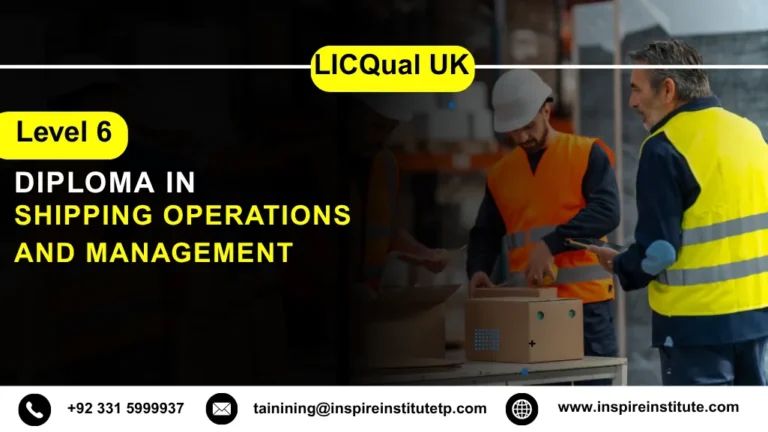
To achieve the LICQual UK Level 6 Diploma in Shipbroking and Chartered Vessel Operations;

Candidates must complete the following 6 Mandatory Units,

Mandatory Units

  • Advanced Shipbroking and Chartering Strategies
  • Global Shipping Markets, Economics, and Trade Policy
  • Maritime Law, Risk, and Regulatory Compliance
  • Vessel Operations, Voyage Estimation, and Costing
  • Strategic Management in Shipping and Logistics
  • Research Project in Shipbroking and Vessel Operations

Upon the Successfuly Completion LICQual UK Level 6 Diploma in Shipbroking and Chartered Vessel Operations, learners will be able to

  • Advanced Shipbroking and Chartering Strategies

Learners will be able to:

  • Apply advanced negotiation techniques to secure profitable chartering agreements.
  • Evaluate the impact of freight market trends on shipbroking and chartering decisions.
  • Analyze complex charter party clauses and recommend risk‑mitigation strategies.
  • Demonstrate expertise in voyage, time, and bareboat chartering practices.
  • Formulate strategies to maximize vessel utilization and client satisfaction.
  • Assess the role of digital platforms and technology in modern shipbroking.
  • Global Shipping Markets, Economics, and Trade Policy

Learners will be able to:

  • Analyze the structure and dynamics of global shipping markets.
  • Evaluate the influence of international trade policies on shipping demand and freight rates.
  • Demonstrate understanding of port economics and their role in global trade.
  • Assess the impact of globalization, supply chains, and emerging markets on shipping.
  • Apply economic models to forecast freight market fluctuations.
  • Critically evaluate the role of shipping in supporting international commerce.
  • Maritime Law, Risk, and Regulatory Compliance

Learners will be able to:

  • Interpret international maritime conventions, including SOLAS, MARPOL, and ISPS Code.
  • Evaluate the legal responsibilities of shipowners, charterers, and brokers.
  • Apply knowledge of marine insurance, liabilities, and dispute resolution.
  • Analyze risk management frameworks for vessel safety and compliance.
  • Demonstrate understanding of arbitration and legal remedies in shipping disputes.
  • Assess the role of compliance in maintaining ethical and sustainable shipping practices.
  • Vessel Operations, Voyage Estimation, and Costing

Learners will be able to:

  • Apply advanced methods of voyage estimation and costing for chartering decisions.
  • Evaluate operational efficiency in vessel scheduling, routing, and fuel management.
  • Demonstrate understanding of laytime, demurrage, and dispatch calculations.
  • Analyze the financial implications of voyage planning and operational choices.
  • Assess the role of technology in optimizing vessel operations and cost control.
  • Formulate strategies to improve profitability and reduce operational risks.
  • Strategic Management in Shipping and Logistics

Learners will be able to:

  • Apply strategic management frameworks to shipping and logistics organizations.
  • Evaluate leadership approaches for managing global shipping operations.
  • Analyze competitive strategies in maritime logistics and supply chain management.
  • Demonstrate understanding of sustainability and innovation in shipping strategies.
  • Assess the role of digital transformation in shaping logistics competitiveness.
  • Formulate long‑term strategies for growth, resilience, and global expansion.
  • Research Project in Shipbroking and Vessel Operations

Learners will be able to:

  • Design and conduct independent research on a specialized shipbroking or vessel operations topic.
  • Apply advanced research methodologies and data analysis techniques.
  • Critically evaluate academic and industry sources to support findings.
  • Present evidence‑based solutions to real‑world challenges in shipbroking and chartering.
  • Demonstrate project management, critical thinking, and problem‑solving skills.
  • Produce a professional research report aligned with international academic standards.
Entry Requirements

Entry Requirements

  • Applicants must be at least 19 years old at the time of enrollment.
  • Applicants should hold a Level 5 diploma, higher education qualification, or equivalent in maritime studies, shipping, logistics, business management, or a related field.
  • It is recommended that learners have practical experience in shipping, shipbroking, vessel operations, or maritime logistics.
  • As the course is delivered in English, learners must demonstrate proficiency in English to understand course materials, participate in discussions, and complete assessments.

What You Need to Know

This course is designed for experienced maritime professionals, shipping managers, and individuals aiming for senior roles in shipbroking, vessel chartering, and maritime operations. It is ideal for professionals working in shipping companies, freight forwarding, maritime logistics, or port operations, as well as graduates seeking advanced expertise to progress into leadership positions in the global shipping industry.

This diploma equips learners with advanced knowledge of shipbroking principles, vessel chartering procedures, market analysis, and maritime regulations. It develops strategic decision-making, negotiation, and operational management skills necessary for managing complex shipping transactions.

  • UK Level 6 internationally recognized professional diploma
  • Advanced understanding of shipbroking, chartering, and vessel operations
  • Strategic management, negotiation, and decision-making skill development
  • Knowledge of international maritime regulations and compliance standards
  • Enhanced employability in global shipping and logistics industries

Graduates can pursue senior-level roles such as:

  • Shipbroker Manager
  • Chartering Manager
  • Vessel Operations Manager
  • Freight Operations Manager
  • Maritime Logistics Executive
  • Shipping Consultant

Learners may advance to:

  • Executive or leadership roles in shipping, logistics, or port management
  • Specialized certifications or postgraduate studies in maritime management or international trade
  • Strategic operational or commercial management positions within shipping organizations

Yes. The LICQual UK Level 6 Diploma is UK-accredited and aligned with international maritime industry standards. It is recognized by employers and organizations worldwide, supporting global career mobility in shipbroking, chartering, and maritime operations.

Apply for This Course


Similar Posts