Overview

Certifying Body

LICQual

Total Credits

60

Evaluation

Assignments Based

Qualification Type

Non Ofqual

Learning Mood

Online

Study Units

6

Qualification #

LICQ2201303

Qualification Structure

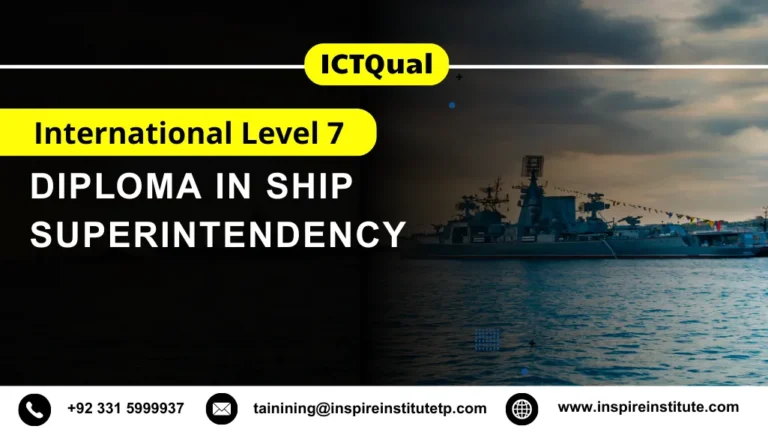
To achieve the LICQual UK Level 3 Diploma in Ship Superintendency;

Candidates must complete the following 6 Mandatory Units,

Mandatory Units

  • Introduction to Ship Superintendency
  • Ship Operations and Maintenance Basics
  • Maritime Safety and Compliance
  • Crew Management and Welfare
  • Ship Documentation and Reporting
  • Professional Development in Ship Superintendency

Upon the Successfuly Completion LICQual UK Level 3 Diploma in Ship Superintendency, learners will be able to

  • Introduction to Ship Superintendency

By the end of this unit, learners will be able to:

  • Explain the role and responsibilities of a ship superintendent in global shipping.
  • Identify the key functions of ship superintendency in operations and compliance.
  • Demonstrate knowledge of international maritime organizations and conventions.
  • Recognize the importance of ship superintendents in ensuring vessel safety and efficiency.
  • Apply foundational concepts of ship management to real-world maritime scenarios.
  • Describe career pathways and progression opportunities in ship superintendency.
  • Ship Operations and Maintenance Basics

By the end of this unit, learners will be able to:

  • Demonstrate understanding of ship operations, voyage planning, and port activities.
  • Explain the fundamentals of ship maintenance, dry-docking, and repair planning.
  • Apply basic principles of asset management to ship operations.
  • Recognize the importance of preventive maintenance for vessel safety and performance.
  • Identify the superintendent’s role in coordinating technical operations.
  • Recommend improvements to enhance operational efficiency and cost-effectiveness.
  • Maritime Safety and Compliance

By the end of this unit, learners will be able to:

  • Demonstrate knowledge of international safety conventions (SOLAS, ISM Code).
  • Apply compliance requirements to ship operations and superintendent duties.
  • Conduct basic risk assessments to ensure safe shipboard environments.
  • Recognize the importance of safety culture in maritime operations.
  • Explain the superintendent’s role in audits, inspections, and compliance reporting.
  • Recommend strategies to improve safety and reduce operational risks.
  • Crew Management and Welfare

By the end of this unit, learners will be able to:

  • Explain the superintendent’s role in crew welfare and human resource management.
  • Demonstrate knowledge of the Maritime Labour Convention (MLC 2006).
  • Apply basic principles of crew scheduling, rotation, and resource allocation.
  • Recognize the importance of multicultural teamwork and communication onboard.
  • Recommend strategies to improve crew welfare, motivation, and retention.
  • Support compliance with international labour and welfare standards.
  • Ship Documentation and Reporting

By the end of this unit, learners will be able to:

  • Demonstrate knowledge of essential ship documentation and reporting requirements.
  • Apply record-keeping practices in line with international maritime standards.
  • Recognize the importance of accurate documentation for audits and inspections.
  • Prepare basic technical and compliance reports for ship operations.
  • Explain the role of documentation in safety, maintenance, and crew management.
  • Recommend improvements to streamline reporting and compliance processes.
  • Professional Development in Ship Superintendency

By the end of this unit, learners will be able to:

  • Prepare for progression to higher-level maritime qualifications, including Level 6.
  • Demonstrate professional skills required for career growth in ship superintendency.
  • Apply problem-solving and decision-making skills to maritime challenges.
  • Develop personal development plans aligned with international maritime standards.
  • Recognize the importance of ethics and professionalism in ship management.
Entry Requirements

Entry Requirements

  • Applicants must be 16 years or older at the time of registration.
  • A minimum of a high school certificate (secondary education) or equivalent qualification is required.
  • No prior experience is strictly required, though basic exposure to maritime operations, ship management, or technical support roles is advantageous.
  • Learners must demonstrate adequate English skills in reading, writing, listening, and speaking to engage with course materials and complete assessments effectively.

What You Need to Know

This course is ideal for individuals looking to develop a career in ship management and maritime operations, including junior officers, aspiring ship superintendents, technical staff, and operations coordinators. It is also suitable for professionals seeking formal recognition of their supervisory and operational skills on board vessels.

You should take this course to gain comprehensive knowledge in ship supervision, crew coordination, technical operations, and maritime compliance. It equips you to manage shipboard activities efficiently, ensure safety, and maintain operational standards in line with international regulations.

  • Gain practical skills in ship superintendency and operational management
  • Learn crew supervision, maintenance planning, and safety procedures
  • Develop technical and leadership competencies for maritime operations
  • Improve employability in global shipping and maritime sectors

Graduates can pursue roles such as Junior Ship Superintendent, Ship Operations Coordinator, Technical Officer, Maritime Supervisor, or Operations Assistant within shipping companies, marine service providers, and port authorities.

Learners can progress to Level 4 or Level 5 diplomas in ship management, technical ship management, or advanced maritime operations, supporting career growth into supervisory and managerial positions.

Yes, the LICQual UK Level 3 Diploma in Ship Superintendency is an internationally recognised qualification, aligned with global maritime industry standards and highly valued by employers worldwide.

Apply for This Course


Similar Posts