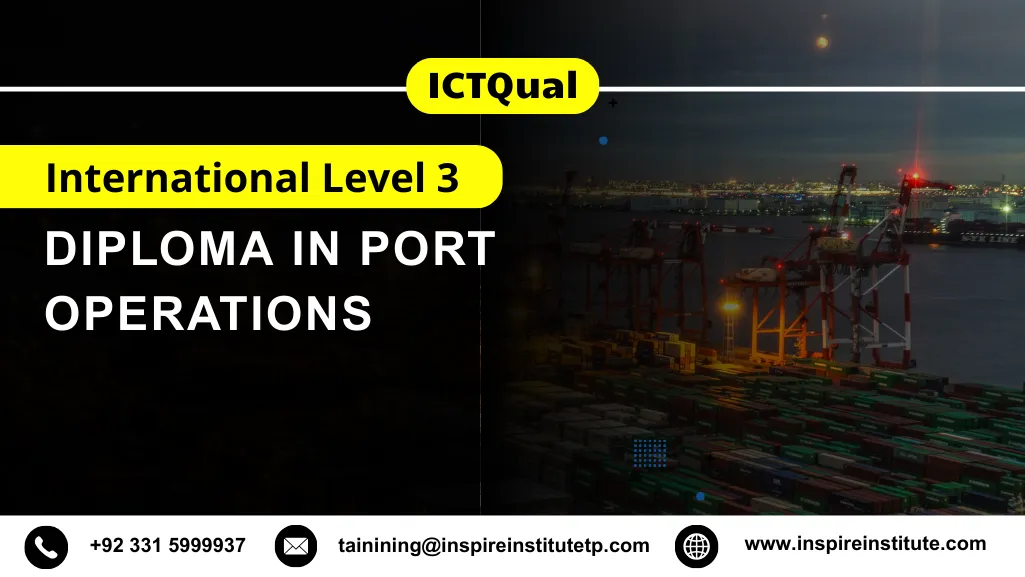
ICTQual International Level 3 Diploma in Port Operations
The ICTQual International Level 3 Diploma in Port Operations is a foundational vocational qualification designed for learners who want to build essential skills in maritime logistics, shipping, and port management. As an industry‑recognised port operations course, it provides practical knowledge of cargo handling, documentation, compliance, and operational procedures that are vital to the smooth functioning of global ports.
This Level 3 port operations qualification emphasises hands‑on learning and industry relevance. Learners gain expertise in port operations and compliance qualifications, including safety standards, trade documentation, and logistics coordination. The programme prepares learners for entry‑level and supervisory roles, making it an ideal choice for those seeking a career in international trade and port operations.
As a global port operations qualification Level 3, the diploma enhances employ ability and supports career mobility across shipping companies, logistics firms, and port authorities. It serves as a strong foundation for progression into higher vocational diplomas, such as advanced studies in maritime logistics and port management.
Accessible worldwide, the course offers flexible study options, making it suitable for learners balancing work and study commitments. Whether learners are seeking an affordable port operations diploma Level 3 or aiming to establish a career in shipping and port management, this programme provides the essential skills required to succeed in the maritime industry.
By completing the ICTQual International Level 3 Diploma in Port Operations, learners gain confidence to pursue roles in cargo handling, logistics support, documentation, and compliance, while building a pathway to lifelong learning and career advancement in global port operations.
Why Choose this Qualification
The ICTQual International Level 3 Diploma in Port Operations is designed for learners who want to build a strong foundation in maritime logistics, shipping, and port management. This qualification provides practical knowledge of cargo handling, documentation, compliance, and operational procedures, making it ideal for those entering the industry or seeking to progress into supervisory roles. It combines global recognition with industry relevance, ensuring learners gain skills that are directly applicable to international trade and port operations.
Global Recognition
- Accredited and respected internationally by employers in shipping and logistics
- Provides credibility with a vocational qualification recognised worldwide
- Supports career mobility across ports, shipping companies, and logistics firms
- Serves as a trusted benchmark for entry‑level maritime education
- Enhances learner profiles for career progression in port operations
- Opens pathways to professional memberships and industry certifications
- Builds confidence with a globally recognised diploma
Industry Relevance
- Aligned with current practices in port operations and international trade
- Provides practical knowledge applicable to cargo handling and logistics firms
- Strengthens understanding of documentation and compliance frameworks
- Builds awareness of safety standards and operational procedures
- Offers training that reflects real‑world industry requirements
- Supports career readiness in port operations and logistics roles
- Serves as a foundation for lifelong learning in maritime disciplines
Career Opportunities
- Entry‑level and supervisory positions in ports, shipping companies, and logistics organisations
- Roles as cargo handlers, documentation assistants, or compliance support staff
- Opportunities in freight forwarding and customs clearance agencies
- Employment prospects in cargo handling and logistics coordination
- Pathways into international trade and port operations leadership roles
- Career mobility across maritime transport and global logistics networks
- Preparation for progression into higher vocational qualifications
Skills Development
- Builds confidence in handling cargo operations and documentation tasks
- Strengthens analytical and problem‑solving skills in trade environments
- Enhances understanding of compliance and safety practices
- Provides training in logistics coordination and operational procedures
- Develops adaptability in dynamic global trade markets
- Improves organisational skills for port operations management
- Encourages independent study and critical thinking at vocational level
Accessibility & Flexibility
- Available worldwide through online, blended, and classroom formats
- Enables learners to balance study with work or personal commitments
- Offers self‑paced modules for convenience and flexibility
- Provides structured tutor support and academic guidance
- Accessible from any location globally
- Affordable compared to traditional maritime training programmes
- Designed to support progression into higher vocational qualifications
Course Overview
UK Based Qualification
Study Units: 6 Units
Evidence & Assignment Based
Course Level: Level 3
Qualification Structure
This qualification, the ICTQual International Level 3 Diploma in Port Operations, consists of 6 mandatory units.
- Port Operations Management and Documentation
- Cargo Handling Equipment and Technology
- Port Safety, Security, and Risk Management
- Marine Services and Vessel Traffic Coordination
- Customer Service and Stakeholder Relations in Ports
- Introduction to International Trade and Port Economics
Who Should Take This Course
The ICTQual International Level 3 Diploma in Port Operations is designed for learners who want to build a strong foundation in maritime logistics, shipping, and port management. This qualification is ideal for individuals entering the industry, those seeking to progress into supervisory roles, and learners aiming to develop practical skills in cargo handling, documentation, compliance, and operational procedures.
Entry‑Level Learners
- Individuals new to the shipping and logistics industry seeking foundational knowledge
- Learners motivated to begin a career in port operations and maritime logistics
- Candidates aiming to gain an industry‑recognised qualification at Level 3
- School leavers or vocational learners preparing for entry‑level maritime careers
- Those wishing to understand basic compliance and documentation processes
- Learners seeking structured training in cargo handling and port safety standards
- Individuals interested in international trade and port operations basics
Career Starters
- Learners preparing for roles as cargo handlers, documentation assistants, or logistics support staff
- Individuals aiming to work in freight forwarding and customs clearance agencies
- Candidates motivated to gain practical skills in port operations and compliance
- Learners seeking to build confidence in operational and supervisory tasks
- Those preparing for career mobility in shipping and logistics organisations
- Learners wishing to progress into higher vocational diplomas in maritime studies
- Individuals seeking a foundation for lifelong learning in port operations
International Learners
- Learners worldwide seeking a globally accredited port operations qualification
- Candidates aiming to enhance career mobility across ports, shipping companies, and logistics firms
- Professionals interested in compliance with international shipping and trade standards
- Learners seeking flexible online or blended study options for accessibility
- International students motivated to gain industry‑relevant skills recognised globally
- Learners preparing for entry‑level supervisory careers in port operations
- Professionals aspiring to strengthen expertise in global maritime logistics and trade support
Industry Entrants & Supervisors
- Individuals seeking progression from entry‑level roles into supervisory positions
- Learners preparing for roles as operations assistants, compliance coordinators, or logistics supervisors
- Candidates interested in cargo handling and trade support services at vocational level
- Those aiming to work in port operations and logistics coordination with leadership responsibilities
- Learners motivated to gain knowledge of compliance and trade procedures
- Professionals seeking to build a career in international trade facilitation and port management
- Industry entrants preparing for mid‑level leadership roles through vocational training
Course Benefits
The ICTQual International Level 3 Diploma in Port Operations provides learners with a strong foundation in maritime logistics, shipping, and port management. This qualification equips learners with practical skills in cargo handling, documentation, compliance, and operational procedures, making it ideal for those entering the industry or seeking to progress into supervisory roles. It is designed to enhance employ ability, support career mobility, and prepare learners for lifelong learning in global port operations.
Global Recognition
- Accredited and respected internationally by employers in shipping and logistics
- Provides credibility with a vocational qualification recognised worldwide
- Supports career mobility across ports, shipping companies, and logistics firms
- Serves as a trusted benchmark for entry‑level maritime education
- Enhances learner profiles for career progression in port operations
- Opens pathways to professional memberships and industry certifications
- Builds confidence with a globally recognised diploma
Industry Relevance
- Aligned with current practices in port operations and international trade
- Provides practical knowledge applicable to cargo handling and logistics firms
- Strengthens understanding of documentation and compliance frameworks
- Builds awareness of safety standards and operational procedures
- Offers training that reflects real‑world industry requirements
- Supports career readiness in port operations and logistics roles
- Serves as a foundation for lifelong learning in maritime disciplines
Career Opportunities
- Entry‑level and supervisory positions in ports, shipping companies, and logistics organisations
- Roles as cargo handlers, documentation assistants, or compliance support staff
- Opportunities in freight forwarding and customs clearance agencies
- Employment prospects in cargo handling and logistics coordination
- Pathways into international trade and port operations leadership roles
- Career mobility across maritime transport and global logistics networks
- Preparation for progression into higher vocational qualifications
Skills Development
- Builds confidence in handling cargo operations and documentation tasks
- Strengthens analytical and problem‑solving skills in trade environments
- Enhances understanding of compliance and safety practices
- Provides training in logistics coordination and operational procedures
- Develops adaptability in dynamic global trade markets
- Improves organisational skills for port operations management
- Encourages independent study and critical thinking at vocational level
Accessibility & Flexibility
- Available worldwide through online, blended, and classroom formats
- Enables learners to balance study with work or personal commitments
- Offers self‑paced modules for convenience and flexibility
- Provides structured tutor support and academic guidance
- Accessible from any location globally
- Affordable compared to traditional maritime training programmes
- Designed to support progression into higher vocational qualifications
Eligibility Criteria
- Age Requirement:Applicants must be at least 18 years old at the time of enrolment to ensure readiness for vocational study.
- Educational Background:Learners are expected to have successfully completed the ICTQual International Level 3 Certificate in Port Operations or an equivalent vocational qualification. In some cases, individuals with a strong general education background and a demonstrated interest in maritime or logistics studies may also be considered.
- Professional Experience:No formal work experience is required. However, learners with prior exposure to shipping, logistics, or port operations will benefit from enhanced understanding and be able to apply course content more effectively in practical contexts.
- English Proficiency:As the programme is delivered in English, learners should demonstrate competence in reading, writing, listening, and speaking. Centres may assess this through internal placement tests, prior study in English, or equivalent evidence of proficiency.
- Additional Requirements: Motivation and commitment to develop specialist knowledge in port operations and logistics management
- Interest in pursuing a career in cargo flow, compliance, and maritime logistics
- Ability to engage in independent study and vocational learning methods
- Access to a digital device and reliable internet connection for blended or online formats
- Willingness to participate in industry‑aligned training and practical assignments
- Readiness to build a foundation for future progression into higher vocational qualifications
Future Progression
The ICTQual International Level 3 Diploma in Port Operations provides learners with a strong foundation in maritime logistics, shipping, and port management. Upon completion, graduates can progress into higher vocational diplomas, industry certifications, and professional pathways that enhance employ ability and career mobility. This qualification opens opportunities for supervisory careers, specialised training, and lifelong learning in the global port operations sector.
Progression into Higher Vocational Diplomas
- Eligibility to pursue ICTQual Level 4 Diplomas in Shipping, Logistics, and International Trade
- Pathways into specialised vocational diplomas in freight forwarding and customs clearance
- Opportunities to study advanced qualifications in maritime transport and port operations
- Progression into industry‑aligned diplomas in supply chain and logistics management
- Access to structured study in shipping law and compliance frameworks
- Preparation for supervisory roles through higher vocational training
- Foundation for lifelong learning in maritime and logistics disciplines
Industry Certifications & Professional Training
- Entry into freight forwarding and customs clearance certifications recognised globally
- Specialised training in cargo handling, documentation, and international trade compliance
- Opportunities to gain credentials in maritime safety and port operations
- Certifications in logistics coordination, warehousing, and supply chain efficiency
- Industry‑recognised short courses in shipping security and dispute resolution
- Access to professional memberships with international shipping and logistics associations
- Training programmes in global trade and supply chain operations
Career Pathways
- Entry‑level and supervisory positions in ports, shipping companies, and logistics organisations
- Roles as cargo handlers, documentation assistants, or compliance support staff
- Opportunities in freight forwarding and customs clearance agencies
- Employment prospects in cargo handling and logistics coordination
- Pathways into international trade and port operations leadership roles
- Career mobility across maritime transport and global logistics networks
- Preparation for progression into executive vocational qualifications
International Opportunities
- Employment prospects with ports, shipping companies, and logistics firms worldwide
- Opportunities in freight forwarding and customs clearance organisations
- Roles in cargo handling and documentation across global trade markets
- Career mobility across diverse regions and international transport hubs
- Entry into shipping agencies, logistics services, and international networks
- Opportunities in global supply chain operations and service excellence initiatives
- Pathways into port operations and trade support positions internationally
Lifelong Learning & Professional Growth
- Continuous development through shipping seminars, workshops, and training programmes
- Opportunities to engage in logistics conferences and international networking events
- Access to lifelong learning initiatives in supply chain, compliance, and finance development
- Participation in industry training schemes and professional development pathways
- Ongoing skill enhancement in documentation, operational procedures, and dispute resolution
- Engagement with professional shipping associations for career advancement
- Pathways to remain updated with evolving global shipping standards and industry reforms