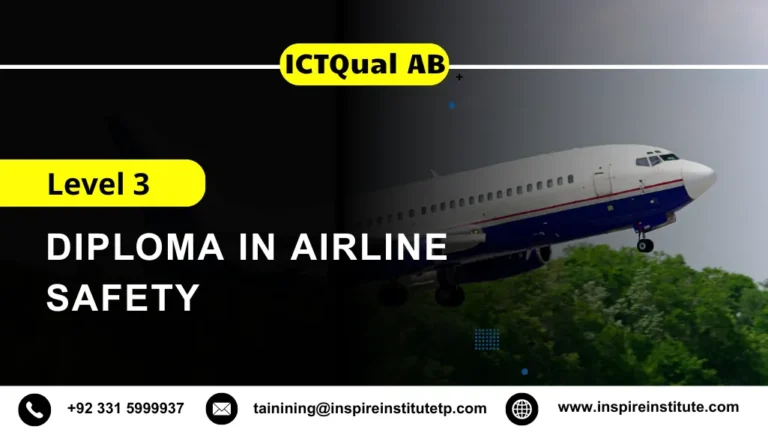
ICTQual AB Level 3 Diploma in Aviation Safety
.The ICTQual AB Level 3 Diploma in Aviation Safety is a globally recognized aviation safety qualification designed to equip learners with the essential skills and knowledge required to maintain the highest standards of safety in both airline and airport operations. This comprehensive aviation safety course provides practical training in risk management, compliance, and emergency response, making it an ideal choice for individuals seeking a strong foundation in aviation safety.
As the aviation industry continues to expand worldwide, the demand for professionals with specialized expertise in aviation safety management has never been greater. This diploma in aviation safety prepares learners to understand and apply international safety regulations, hazard identification techniques, and crisis management procedures that are vital to ensuring secure and efficient aviation operations.
The program is particularly suited for aspiring aviation professionals, current airline and airport staff, and career changers who want to build a career in aviation safety. By completing this aviation safety training program, learners gain valuable insights into aviation industry safety standards, operational compliance, and the importance of fostering a strong safety culture.
Recognized internationally, the ICTQual AB Level 3 Diploma serves as a stepping stone to advanced roles in safety management, compliance, and operational leadership. It empowers learners to contribute effectively to the aviation industry, ensuring passenger and crew safety while supporting the smooth functioning of airline and airport operations. With its emphasis on professional development and industry relevance, this aviation safety professional diploma is a valuable credential for anyone aspiring to succeed in the global aviation sector.
Why Choose this Qualification
The ICTQual AB Level 3 Diploma in Aviation Safety is designed to provide learners with the essential knowledge and practical skills required to ensure safe and efficient airline and airport operations. This qualification is ideal for individuals beginning their aviation journey or professionals seeking to strengthen their expertise in aviation safety management. With global recognition, industry relevance, and clear career progression opportunities, it stands out as a valuable credential for anyone aspiring to succeed in the aviation sector.
Global Recognition and Credibility
- Internationally respected aviation safety qualification
- Recognized by airlines, airports, and aviation authorities worldwide
- Enhances credibility in both local and global aviation markets
- Provides a competitive edge in recruitment and career advancement
- Serves as a benchmark for entry-level aviation safety education
- Strengthens professional reputation in aviation safety and compliance
- Opens doors to opportunities across international aviation hubs
Practical Safety Skills Development
- Focuses on essential aviation safety protocols and procedures
- Builds knowledge of hazard identification and risk management
- Provides training in emergency response and crisis handling
- Strengthens understanding of aviation safety regulations and compliance
- Develops skills for maintaining passenger and crew safety
- Offers practical insights into airline and airport operations
- Prepares learners for real-world aviation safety challenges
Career Advancement Opportunities
- Opens pathways to entry-level and supervisory roles in aviation safety
- Increases employability in airlines, airports, and aviation authorities
- Supports progression into specialized safety and compliance positions
- Provides a foundation for consultancy and advisory roles in aviation safety
- Enhances opportunities for international career mobility
- Builds a strong base for lifelong learning in aviation safety management
- Strengthens prospects for leadership roles in safety departments
Industry-Relevant Curriculum
- Developed in consultation with aviation safety experts
- Reflects current global standards and best practices in aviation safety
- Addresses emerging challenges such as sustainability and digitalization
- Includes modules on safety management systems and compliance frameworks
- Focuses on operational efficiency and passenger protection
- Ensures learners are prepared for industry demands and expectations
- Bridges academic learning with practical applications
Accessibility and Flexibility
- Designed for both new entrants and working professionals
- Offers flexible study modes to balance work and education
- Accessible to learners worldwide through international delivery partners
- Provides structured modules with clear progression routes
- Encourages independent learning and critical thinking
- Tailored to diverse learner needs and career goals
- Combines academic rigor with practical relevance
Pathway to Global Career Mobility
- Recognized across multiple aviation hubs worldwide
- Facilitates career progression in international airlines and aviation organizations
- Supports mobility into regulatory and compliance roles
- Provides transferable skills for cross-border aviation careers
- Strengthens global networking and professional connections
- Opens opportunities in consultancy, training, and safety management
- Builds confidence to work in diverse cultural and operational contexts
Course Overview
UK based Qualification
Study Units: 6 Units
Evidence & Assignment Based
Course Level: Level 3
Qualification Structure
This qualification, the ICTQual AB Level 3 Diploma in Aviation Safety, consists of 6 mandatory units.
- Principles of Aviation Safety and Hazard Awareness
- Airside Operations and Ground Safety Procedures
- Cabin Safety, Passenger Protection, and Emergency Protocols
- Aviation Safety Regulations, Standards, and Compliance
- Emergency Response, Crisis Management, and Communication
- Risk Assessment, Incident Reporting, and Safety Culture Development
Who Should Take This Course
The ICTQual AB Level 3 Diploma in Aviation Safety is designed for individuals who want to build a strong foundation in aviation safety and operations. Whether you are new to the industry or seeking to enhance your professional expertise, this qualification provides the essential knowledge and practical skills needed to succeed in aviation safety roles. Below are the groups of learners who will benefit most from this program.
Aspiring Aviation Professionals
- Individuals looking to start a career in the aviation industry
- Learners seeking entry-level qualifications in aviation safety
- Those interested in building a foundation for future aviation roles
- Students aiming to gain practical knowledge of safety standards
- Career starters who want internationally recognized credentials
- Individuals motivated to join airlines, airports, or aviation authorities
- Learners preparing for long-term growth in aviation safety
Current Airline and Airport Staff
- Employees working in cabin crew, ground handling, or airport operations
- Staff responsible for passenger and crew safety procedures
- Team members seeking formal recognition of their safety skills
- Professionals aiming to strengthen compliance knowledge
- Individuals wanting to improve operational efficiency and safety awareness
- Staff preparing for supervisory or safety-focused roles
- Employees seeking career progression within aviation organizations
Safety and Security Personnel
- Professionals working in aviation security and emergency response
- Individuals responsible for enforcing safety regulations and protocols
- Staff involved in risk management and hazard identification
- Personnel aiming to enhance crisis management skills
- Team members ensuring compliance with international aviation standards
- Safety officers seeking structured training and certification
- Security staff wanting to expand into broader aviation safety roles
Career Changers and International Learners
- Professionals from logistics, tourism, or transportation sectors entering aviation
- Individuals seeking to transition into aviation safety roles
- Learners from diverse cultural and professional backgrounds
- Career changers aiming for globally recognized aviation qualifications
- International students preparing for aviation careers abroad
- Professionals relocating to aviation hubs worldwide
- Learners seeking transferable skills for cross-border aviation opportunities
Students and Graduates
- Recent graduates interested in aviation safety and operations
- Students seeking practical, industry-relevant training
- Learners aiming to strengthen employability in aviation markets
- Individuals preparing for advanced aviation qualifications in the future
- Graduates wanting to specialize in aviation safety management
- Students motivated to gain international recognition early in their careers
- Ambitious learners seeking a competitive edge in aviation recruitment
Course Benefits
The ICTQual AB Level 3 Diploma in Aviation Safety offers learners a powerful combination of industry recognition, practical skills, and career progression opportunities. This qualification is designed to strengthen employability, enhance professional credibility, and prepare learners for diverse roles across the global aviation sector. Below are the key benefits of completing this program.
Global Recognition
- Internationally respected aviation safety qualification
- Recognized by airlines, airports, and aviation authorities worldwide
- Enhances credibility in both local and global aviation markets
- Provides a competitive edge in recruitment and career advancement
- Serves as a benchmark for entry-level aviation safety education
- Strengthens professional reputation in aviation safety and compliance
- Opens doors to opportunities across international aviation hubs
Career Advancement
- Prepares learners for entry-level and supervisory safety roles
- Increases employability in airlines and aviation organizations
- Supports progression into specialized safety and compliance positions
- Provides a foundation for consultancy and advisory roles in aviation safety
- Enhances opportunities for international career mobility
- Builds a strong base for lifelong learning in aviation safety management
- Strengthens prospects for leadership roles in safety departments
Practical Industry Relevance
- Curriculum developed with aviation safety experts and stakeholders
- Focuses on real-world aviation safety challenges and solutions
- Includes case studies and applied learning opportunities
- Addresses compliance with international aviation safety standards
- Provides tools for hazard identification and risk management
- Strengthens knowledge of emergency response and crisis management
- Ensures learners are job-ready upon completion
Safety and Compliance Expertise
- Builds understanding of aviation safety regulations and frameworks
- Strengthens skills in monitoring and enforcing compliance
- Provides training in safety management systems (SMS)
- Enhances ability to identify and mitigate operational risks
- Develops expertise in passenger and crew safety protocols
- Prepares learners to handle audits and inspections effectively
- Empowers professionals to maintain a strong safety culture
Flexibility and Accessibility
- Designed for both new entrants and working professionals
- Offers flexible study modes to balance work and education
- Accessible to learners worldwide through international delivery partners
- Provides structured modules with clear progression routes
- Encourages independent learning and critical thinking
- Tailored to diverse learner needs and career goals
- Combines academic rigor with practical relevance
Networking and Global Opportunities
- Connects learners with aviation professionals worldwide
- Builds strong industry networks and collaborations
- Provides access to international aviation hubs and opportunities
- Strengthens global mobility and career transitions
- Encourages cross-cultural learning and professional exchange
- Opens opportunities in consultancy, training, and safety management
- Expands professional visibility in the aviation sector
Eligibility Criteria:
Age: Learners must be 18 years or older at the time of enrolment. Some centres may recommend learners to be 18+ if they are pursuing employment alongside study.
Educational Background: No formal academic qualifications are required.A basic understanding of English, mathematics, and general science is recommended to support comprehension of safety procedures and aviation terminology.
Work Experience: While not mandatory, prior experience in aviation support, ground handling, customer service, or safety-related roles can enhance learning outcomes.Learners with exposure to airside, landside, or cabin environments may find it easier to contextualise safety procedures and hazard management.Employers may also nominate staff for this qualification as part of onboarding or professional development.
English Proficiency:Learners should demonstrate English language proficiency at CEFR A2 or B1 level, especially for programmes delivered in English.This supports effective communication in safety-critical aviation environments.
Technical and Digital Requirements: Access to a computer or smart device with internet connectivity is required for blended or online delivery.Basic IT literacy is helpful for accessing course materials, submitting assignments, and participating in virtual safety briefings.
Physical and Operational Readiness: Learners should be physically capable of participating in safety drills, emergency simulations, and operational walkthroughs.General awareness of airport and airline operations is beneficial.
Future proression
Completing the ICTQual AB Level 3 Diploma in Aviation Safety provides learners with a strong foundation to advance into diverse roles within the aviation industry. This qualification prepares individuals for career growth, specialization, and international opportunities in aviation safety and operations. Below are the key progression routes available after achieving this diploma.
Entry-Level and Supervisory Roles
- Opportunities to work as aviation safety assistants or coordinators
- Roles in cabin crew safety and compliance monitoring
- Supervisory positions overseeing passenger and crew safety protocols
- Employment in safety monitoring and operational departments
- Positions supporting emergency response and crisis management units
- Roles assisting with hazard identification and risk assessments
- Opportunities to progress into team leadership roles in safety operations
Specialized Safety and Compliance Positions
- Careers in aviation safety inspection and auditing
- Roles focused on implementing safety management systems (SMS)
- Positions in airline security and regulatory compliance departments
- Specialization in risk management and hazard prevention strategies
- Opportunities in occupational health and safety within aviation environments
- Roles ensuring adherence to international aviation safety standards
- Positions supporting sustainability and environmental safety initiatives
Airline Operations and Support Functions
- Employment in airline operations and ground services management
- Roles in passenger safety and customer service support
- Opportunities in cargo and logistics safety management
- Positions in ramp safety and aircraft handling supervision
- Roles assisting with operational efficiency and safety coordination
- Opportunities to contribute to airline safety training programs
- Positions supporting daily operational compliance and monitoring
Consultancy and Advisory Pathways
- Opportunities to assist aviation consultancy firms with safety projects
- Roles advising airlines on safety improvements and compliance strategies
- Positions supporting government or regulatory bodies in safety compliance
- Opportunities to contribute to safety audits and operational reviews
- Roles in advisory services for aviation training and development
- Positions offering guidance on emergency preparedness and response
- Opportunities to build expertise as a junior consultant in aviation safety
International Career Mobility
- Access to roles in airlines across global aviation hubs
- Opportunities to work with international safety and compliance teams
- Positions supporting compliance with cross-border aviation regulations
- Roles in multinational aviation organizations and service providers
- Opportunities to strengthen cross-cultural safety management skills
- Employment in international consultancy and advisory services
- Positions offering exposure to diverse aviation environments worldwide
Lifelong Professional Development
- Pathways to advanced industry certifications in aviation safety
- Opportunities to attend workshops, seminars, and global aviation conferences
- Continuous skill development through specialized training programs
- Roles that encourage mentoring and supporting new aviation professionals
- Opportunities to contribute to aviation research and innovation projects
- Building expertise through participation in safety-focused industry networks
- Expanding influence through publications and thought leadership in aviation safety