
What Is Environmental Management? A Complete Guide to Principles, Benefits, and Sustainability
What Is Environmental Management?
Environmental management is the strategic and systematic process of planning, implementing, monitoring, evaluating, and continually improving policies, practices, and technologies to minimize the environmental impacts of human activities while promoting the sustainable use of natural resources. It integrates environmental protection with economic development and social responsibility by preventing pollution, conserving energy and water, managing waste, protecting biodiversity, mitigating climate change, and ensuring compliance with environmental laws, regulations, and internationally recognized standards. Environmental management enables organizations, governments, and communities to identify environmental risks, improve resource efficiency, enhance environmental performance, and support long-term sustainability for present and future generations.
Why Is Environmental Management Important?
Environmental management is important because it helps protect natural resources, reduce pollution, ensure compliance with environmental regulations, and promote sustainable development. By integrating environmental considerations into planning, decision-making, and daily operations, environmental management enables organizations, governments, and communities to minimize their environmental impact while supporting economic growth and social well-being.
As environmental challenges such as climate change, resource depletion, biodiversity loss, and pollution continue to increase, effective environmental management provides a structured approach to balancing development with environmental protection. It encourages the responsible use of natural resources, improves operational efficiency, and helps create a healthier and more sustainable future.
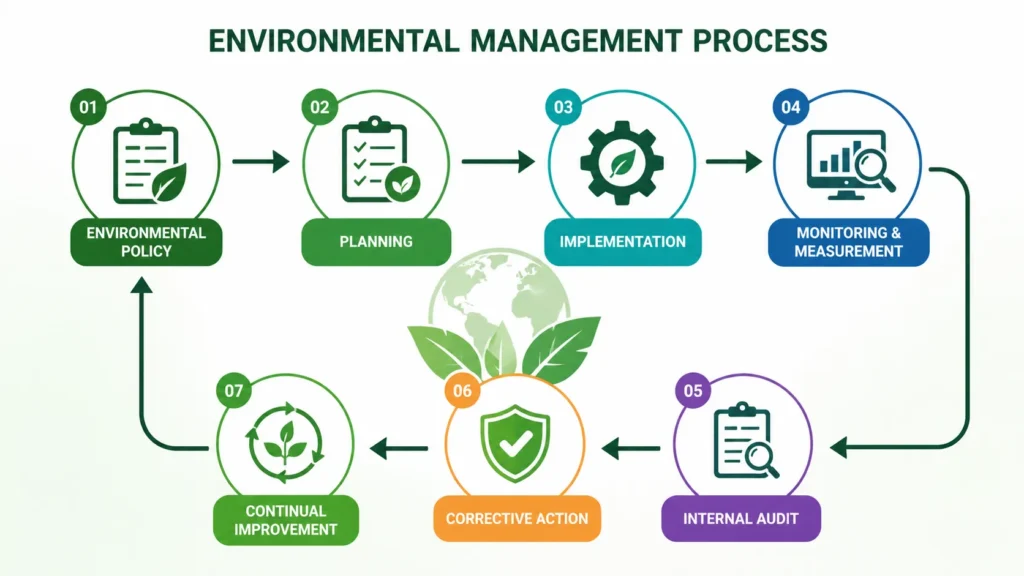
Key Reasons Why Environmental Management Is Important
1. Protects Natural Resources
Environmental management promotes the responsible use and conservation of vital resources such as water, air, soil, forests, and minerals. It helps ensure these resources remain available for future generations.
2. Reduces Pollution
Organizations can identify sources of air, water, and soil pollution and implement measures to prevent or minimize environmental contamination, improving ecosystem and public health.
3. Supports Sustainable Development
Environmental management balances economic growth with environmental protection and social responsibility, ensuring that development meets present needs without compromising the ability of future generations to meet their own.
4. Ensures Legal and Regulatory Compliance
Businesses and organizations must comply with environmental laws and regulations. Effective environmental management helps identify legal obligations, reduce the risk of violations, and avoid penalties, fines, and reputational damage.
5. Improves Resource Efficiency
By optimizing the use of energy, water, raw materials, and other resources, environmental management reduces waste, lowers operating costs, and improves overall organizational performance.
6. Helps Combat Climate Change
Environmental management supports initiatives to reduce greenhouse gas emissions, improve energy efficiency, adopt renewable energy, and strengthen climate resilience, contributing to global climate action.
7. Enhances Business Performance
Organizations with effective environmental management practices often experience improved productivity, stronger stakeholder trust, enhanced brand reputation, and increased competitiveness in the marketplace.
8. Protects Public Health
Reducing pollution and managing environmental risks helps improve air quality, water quality, sanitation, and overall community health, leading to safer living and working environments.
9. Conserves Biodiversity and Ecosystems
Environmental management encourages habitat protection, ecosystem restoration, and sustainable land use, helping preserve biodiversity and maintain ecological balance.
10. Drives Continuous Improvement
Environmental management is an ongoing process that encourages organizations to regularly assess environmental performance, set measurable objectives, implement improvements, and adopt innovative technologies and sustainable practices.
What Are the Key Components of Environmental Management?
Environmental management is built on a structured framework that helps organizations identify, control, and continually improve their environmental performance. These key components work together to reduce environmental impacts, ensure legal compliance, and promote sustainable development.
1. Environmental Policy
An environmental policy is a formal statement that outlines an organization’s commitment to environmental protection, pollution prevention, legal compliance, and continual improvement. It provides the foundation for all environmental management activities and guides decision-making across the organization.
2. Environmental Planning
Planning involves identifying environmental aspects and impacts, evaluating environmental risks and opportunities, understanding legal and regulatory requirements, and establishing measurable environmental objectives and targets. Effective planning enables organizations to prioritize actions and allocate resources efficiently.
3. Environmental Risk Assessment
Environmental risk assessment identifies potential environmental hazards associated with an organization’s activities, products, or services. It helps determine the likelihood and consequences of environmental incidents, allowing organizations to implement appropriate control measures.
4. Legal and Regulatory Compliance
Organizations must identify and comply with applicable environmental laws, regulations, permits, and industry standards. Maintaining compliance reduces legal risks, protects the environment, and demonstrates corporate responsibility.
5. Resource Management
Efficient management of natural resources—including energy, water, raw materials, and land—is essential for minimizing environmental impacts. Organizations implement conservation measures to reduce consumption, improve efficiency, and support sustainable resource use.
What Is the Scope of Environmental Management?
The scope of environmental management refers to the broad range of activities, policies, and practices involved in protecting the environment, conserving natural resources, preventing pollution, and promoting sustainable development. It encompasses the planning, implementation, monitoring, and continual improvement of environmental performance across industries, governments, and communities.
Environmental management is not limited to controlling pollution. It also addresses climate change, biodiversity conservation, resource efficiency, environmental compliance, waste management, environmental risk management, and sustainable business practices. Its scope extends to every stage of an organization’s operations, from planning and design to production, distribution, and end-of-life disposal.
Key Areas Within the Scope of Environmental Management
1. Natural Resource Conservation
Environmental management promotes the sustainable use and conservation of natural resources such as water, air, soil, forests, minerals, and biodiversity to ensure their availability for future generations.
2. Pollution Prevention and Control
A major aspect of environmental management is preventing and reducing air, water, soil, and noise pollution through effective planning, cleaner technologies, and responsible operational practices.
3. Waste Management
Environmental management includes minimizing waste generation, promoting recycling and reuse, safely managing hazardous waste, and implementing sustainable waste disposal methods to reduce environmental impacts.
4. Environmental Compliance
Organizations must comply with environmental legislation, permits, and industry standards. Environmental management ensures compliance through regular monitoring, audits, and corrective actions.
5. Environmental Impact Assessment (EIA)
Environmental management evaluates the potential environmental impacts of proposed projects before implementation, enabling informed decision-making and the adoption of mitigation measures.
6. Climate Change Mitigation and Adaptation
The scope includes reducing greenhouse gas emissions, improving energy efficiency, supporting renewable energy, enhancing climate resilience, and adapting to changing environmental conditions.
7. Environmental Risk Management
Organizations identify, assess, and manage environmental risks associated with their activities to prevent incidents, protect ecosystems, and ensure business continuity.
8. Sustainable Resource Management
Environmental management promotes the efficient use of energy, water, and raw materials, reducing resource consumption while improving operational performance and sustainability.
Industries Covered by Environmental Management
The scope of environmental management extends across numerous sectors, including:
- Manufacturing and industrial production
- Construction and infrastructure
- Energy and utilities
- Oil and gas
- Agriculture and forestry
- Mining and minerals
- Transportation and logistics
- Healthcare
- Hospitality and tourism
- Government and public service
What Is an Environmental Management System (EMS)?
An Environmental Management System (EMS) is a structured framework that enables an organization to identify, manage, monitor, and continually improve the environmental impacts of its activities, products, and services. It provides a systematic approach to environmental management by helping organizations reduce pollution, conserve natural resources, comply with environmental laws, and achieve their sustainability objectives.
An EMS integrates environmental considerations into an organization’s daily operations and strategic decision-making. Rather than focusing on a single environmental issue, it addresses all significant environmental aspects, including energy use, water consumption, waste generation, emissions, resource efficiency, and environmental risk management.
Purpose of an Environmental Management System
The primary purpose of an EMS is to help organizations:
- Protect the environment through responsible operational practices.
- Prevent pollution and minimize environmental impacts.
- Ensure compliance with environmental laws and regulations.
- Improve the efficient use of energy, water, and raw materials.
- Reduce waste and greenhouse gas emissions.
- Manage environmental risks and opportunities.
- Enhance environmental performance through continual improvement.
- Support sustainable business growth and corporate responsibility.
What Is the Relationship Between Environmental Management and Sustainability?
Environmental management and sustainability are closely connected because environmental management provides the practical framework for achieving sustainability. While sustainability is the long-term goal of balancing environmental protection, economic growth, and social well-being, environmental management consists of the policies, systems, and practices that help organizations and communities achieve that goal.
In simple terms, sustainability defines what should be achieved, while environmental management defines how to achieve it. By implementing effective environmental management strategies, organizations can reduce their environmental footprint, conserve natural resources, comply with environmental regulations, and contribute to sustainable development.
Understanding the Relationship
Environmental management focuses on identifying, controlling, and reducing the environmental impacts of human activities. It includes activities such as pollution prevention, waste management, energy efficiency, water conservation, environmental risk assessment, and compliance with environmental legislation.
Sustainability, on the other hand, is a broader concept that seeks to meet the needs of the present without compromising the ability of future generations to meet their own needs. It is based on three interconnected pillars:
- Environmental sustainability – Protecting ecosystems, conserving natural resources, and reducing pollution.
- Economic sustainability – Supporting long-term economic growth through efficient resource use and responsible business practices.
- Social sustainability – Promoting human health, safety, equity, and community well-being.
Environmental management primarily supports the environmental pillar while also contributing to economic efficiency and social responsibility.
How Environmental Management Supports Sustainability
1. Conserves Natural Resources
Environmental management encourages the efficient use of water, energy, land, and raw materials, ensuring that resources remain available for future generations.
2. Prevents Pollution
Organizations implement pollution prevention measures to reduce emissions, wastewater, hazardous substances, and other environmental impacts, helping protect ecosystems and public health.
3. Improves Resource Efficiency
Efficient use of materials, energy, and water reduces waste, lowers operating costs, and supports sustainable production and consumption.
4. Supports Climate Change Mitigation
Environmental management promotes greenhouse gas reduction, renewable energy adoption, carbon management, and climate resilience, helping organizations contribute to global climate goals.
5. Protects Biodiversity
Sustainable environmental practices help conserve habitats, restore ecosystems, and protect wildlife, maintaining ecological balance.
6. Ensures Environmental Compliance
By complying with environmental laws, regulations, and recognized standards, organizations reduce legal risks while demonstrating responsible environmental stewardship.
7. Encourages Continual Improvement
Environmental management systems encourage organizations to regularly monitor performance, set new objectives, and improve environmental practices over time.
Environmental Management and the Three Pillars of Sustainability
Environmental management contributes to all three dimensions of sustainability:
| Sustainability Pillar | Contribution of Environmental Management |
|---|---|
| Environmental | Reduces pollution, conserves natural resources, protects biodiversity, and improves environmental performance. |
| Economic | Increases resource efficiency, reduces operational costs, minimizes environmental risks, and supports long-term business success. |
| Social | Improves public health, workplace safety, community well-being, and corporate social responsibility. |
The Role of Environmental Management Systems (EMS)
Organizations often implement an Environmental Management System (EMS) to integrate sustainability into daily operations. An EMS helps organizations:
- Identify environmental impacts and risks.
- Set environmental objectives and performance targets.
- Monitor compliance with environmental regulations.
- Improve energy and resource efficiency.
- Reduce waste and emissions.
- Support continual improvement and sustainable business practices.
By following internationally recognized frameworks such as ISO 14001, organizations can systematically strengthen environmental performance while advancing their sustainability objectives.
Benefits of Integrating Environmental Management and Sustainability
Organizations that align environmental management with sustainability can:
- Reduce environmental impacts and pollution.
- Improve resource efficiency and reduce operating costs.
- Strengthen legal and regulatory compliance.
- Enhance corporate reputation and stakeholder trust.
- Increase resilience to environmental and climate-related risks.
- Support innovation and sustainable business growth.
- Contribute to global sustainability goals and environmental stewardship.
Why Is Environmental Management Essential for Businesses?
Environmental management is essential for businesses because it helps minimize environmental impacts, ensure compliance with environmental laws and regulations, improve operational efficiency, reduce costs, and support long-term sustainable growth. By adopting effective environmental management practices, businesses can protect natural resources, reduce pollution, manage environmental risks, and strengthen their reputation among customers, investors, employees, and other stakeholders.
In today’s competitive business environment, organizations are increasingly expected to demonstrate environmental responsibility. Environmental management enables businesses to integrate sustainability into their operations while improving productivity, reducing waste, and creating long-term value.
Key Reasons Why Environmental Management Is Essential for Businesses
1. Ensures Legal and Regulatory Compliance
Businesses must comply with environmental laws, regulations, permits, and industry standards. Environmental management helps organizations identify legal requirements, monitor compliance, reduce the risk of violations, and avoid fines, legal action, and operational disruptions.
2. Reduces Environmental Impact
Environmental management helps businesses identify and control the environmental effects of their activities by reducing air emissions, wastewater, waste generation, noise pollution, and greenhouse gas emissions. This contributes to environmental protection and sustainable operations.
3. Improves Resource Efficiency
Efficient management of energy, water, raw materials, and other resources reduces unnecessary consumption, lowers operating costs, and increases productivity. Resource efficiency also supports responsible business practices and long-term sustainability.
4. Lowers Operating Costs
Reducing waste, improving energy efficiency, recycling materials, and optimizing production processes can significantly decrease operational expenses while improving profitability.
5. Strengthens Risk Management
Environmental management enables businesses to identify environmental risks, prepare for emergencies, and implement preventive measures that reduce the likelihood of environmental incidents, accidents, and liabilities.
How Does Environmental Management Improve Public Health?
Environmental management improves public health by reducing pollution, protecting natural resources, ensuring access to clean air and water, promoting safe waste management, and minimizing environmental risks that can affect human health. Through effective planning, pollution prevention, and sustainable resource management, environmental management creates healthier living and working environments while reducing the spread of diseases and exposure to hazardous substances.
As populations grow and industrial activities expand, environmental management plays a critical role in addressing health challenges associated with contaminated water, poor air quality, improper waste disposal, climate change, and environmental degradation. By integrating environmental protection into policies and operations, governments, businesses, and communities can safeguard public health and improve overall quality of life.
Ways Environmental Management Improves Public Health
1. Improves Air Quality
Environmental management helps reduce emissions of harmful pollutants from industries, vehicles, and other sources. Cleaner air lowers the risk of respiratory diseases, cardiovascular conditions, asthma, allergies, and other health problems associated with air pollution.
2. Protects Water Quality
Effective environmental management prevents water contamination by controlling industrial discharges, treating wastewater, and protecting freshwater sources. Access to clean drinking water reduces the spread of waterborne diseases and supports better hygiene and sanitation.
3. Promotes Safe Waste Management
Proper collection, recycling, treatment, and disposal of municipal, industrial, medical, and hazardous waste help prevent soil and water contamination, reduce disease transmission, and protect communities from harmful chemicals and pathogens.
4. Reduces Exposure to Hazardous Chemicals
Environmental management encourages the safe handling, storage, transportation, and disposal of hazardous substances. This minimizes the risk of chemical exposure for workers, nearby communities, and ecosystems.
5. Prevents Soil Contamination
Managing industrial waste, agricultural chemicals, and contaminated land helps preserve soil quality, supports safe food production, and reduces the risk of harmful substances entering the food chain.
6. Supports Food Safety
Healthy soil, clean water, and pollution control contribute to safer agricultural production and reduce the likelihood of contaminants affecting crops, livestock, and food supplies.
7. Reduces Noise Pollution
Environmental management includes strategies to control excessive noise from transportation, construction, and industrial activities, improving mental well-being, reducing stress, and enhancing community health.
8. Helps Address Climate Change
By reducing greenhouse gas emissions, improving energy efficiency, and promoting sustainable practices, environmental management helps limit the health impacts of climate change, including heat-related illnesses, poor air quality, and the spread of climate-sensitive diseases.
9. Protects Ecosystems and Biodiversity
Healthy ecosystems provide clean water, fertile soil, natural disease regulation, and other ecosystem services that directly support human health and well-being.
10. Enhances Workplace Health and Safety
Environmental management helps organizations identify and control environmental hazards in the workplace, reducing occupational illnesses, improving indoor environmental quality, and creating safer working conditions.
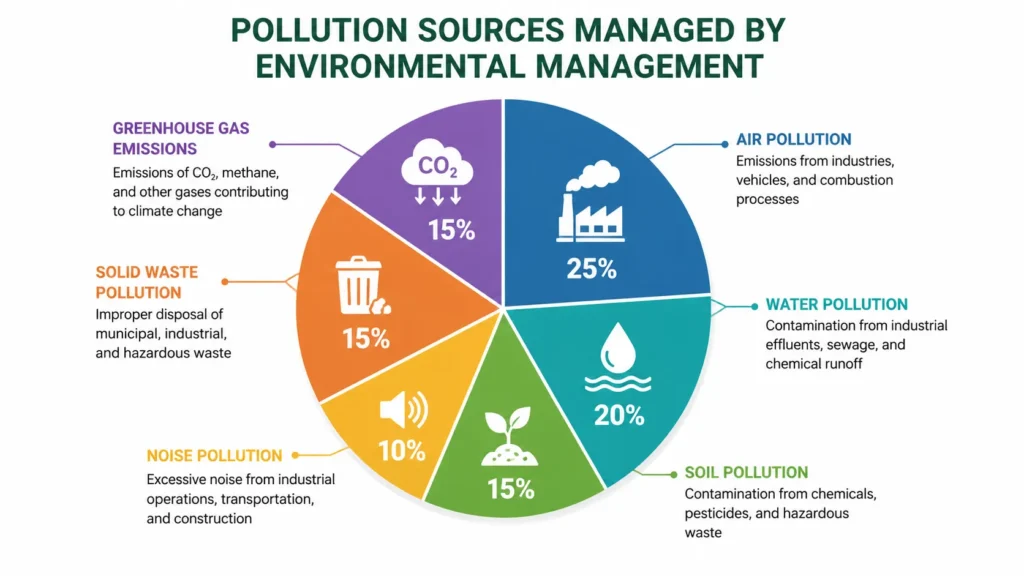
Public Health Benefits of Environmental Management
Implementing effective environmental management can:
- Improve air and water quality
- Reduce the spread of infectious and waterborne diseases
- Lower exposure to toxic chemicals and hazardous waste
- Improve food safety and sanitation
- Reduce respiratory and cardiovascular illnesses
- Support healthier workplaces and communities
- Strengthen resilience to climate-related health risks
- Improve overall quality of life and life expectancy
How Can Organizations Implement an Effective Environmental Management System (EMS)?
Implementing an effective Environmental Management System (EMS) enables organizations to systematically manage their environmental responsibilities, reduce environmental impacts, ensure legal compliance, and improve overall environmental performance. An EMS integrates environmental considerations into daily operations, helping organizations achieve sustainability objectives while supporting business efficiency and continual improvement.
Many organizations develop their EMS using the internationally recognized ISO 14001 framework, which follows the Plan-Do-Check-Act (PDCA) cycle to promote continual improvement.
Steps to Implement an Effective Environmental Management System
1. Secure Leadership Commitment
Successful implementation begins with strong support from top management. Leaders should establish an environmental vision, allocate resources, define responsibilities, and demonstrate a commitment to environmental protection and continual improvement.
2. Develop an Environmental Policy
Create a clear environmental policy that reflects the organization’s commitment to:
- Protecting the environment
- Preventing pollution
- Complying with environmental laws and regulations
- Conserving natural resources
- Continually improving environmental performance
The policy should be communicated to employees and relevant stakeholders.
3. Identify Environmental Aspects and Impacts
Evaluate how the organization’s activities, products, and services affect the environment by identifying significant environmental aspects, such as:
- Energy consumption
- Water use
- Air emissions
- Waste generation
- Wastewater discharge
- Chemical handling
- Noise and dust
- Greenhouse gas emissions
Assess the environmental impacts and prioritize areas requiring management.
4. Identify Legal and Regulatory Requirements
Determine all applicable environmental legislation, permits, industry standards, and other compliance obligations. Establish processes to monitor regulatory changes and maintain ongoing compliance.
5. Conduct an Environmental Risk Assessment
Assess environmental risks associated with operations and identify opportunities to improve environmental performance. Risk assessments help organizations prevent incidents and prepare for environmental emergencies.
6. Set Environmental Objectives and Targets
Develop measurable objectives and targets aligned with the environmental policy. Examples include:
- Reducing energy consumption
- Lowering greenhouse gas emissions
- Minimizing waste generation
- Increasing recycling rates
- Conserving water
- Improving resource efficiency
Objectives should be specific, measurable, achievable, relevant, and time-bound (SMART).
7. Develop an Environmental Management Program
Create action plans that define:
- Responsibilities
- Resources
- Timelines
- Performance indicators
- Monitoring methods
These programs ensure environmental objectives are effectively implemented.
8. Implement Operational Controls
Establish documented procedures and controls to manage significant environmental aspects, including:
- Waste management
- Pollution prevention
- Chemical storage and handling
- Water conservation
- Energy management
- Emergency preparedness and response
Operational controls help minimize environmental risks and ensure consistent performance.
9. Train Employees and Build Awareness
Provide environmental training to employees so they understand:
- Environmental policies and objectives
- Their environmental responsibilities
- Safe work practices
- Emergency response procedures
- Waste reduction and resource conservation practices
Employee engagement is essential for successful EMS implementation.
10. Monitor and Measure Environmental Performance
Track environmental performance using key performance indicators (KPIs), inspections, environmental monitoring, and data analysis. Common metrics include:
- Energy consumption
- Water usage
- Waste generation
- Recycling rates
- Air emissions
- Carbon footprint
- Compliance performance
Regular monitoring helps identify trends and opportunities for improvement.
11. Conduct Internal Environmental Audits
Perform periodic audits to evaluate whether the EMS is operating effectively and meeting organizational objectives. Audits help identify non-conformities, verify legal compliance, and improve system performance.
12. Take Corrective and Preventive Actions
When environmental issues or non-conformities are identified, organizations should:
- Investigate root causes
- Correct deficiencies
- Implement preventive measures
- Update procedures where necessary
This helps prevent recurring problems and strengthens the EMS.
13. Review and Continually Improve the EMS
Senior management should regularly review the EMS to evaluate its effectiveness, assess environmental performance, and identify opportunities for continual improvement. Reviews should consider:
- Audit findings
- Environmental objectives
- Compliance status
- Stakeholder feedback
- Emerging environmental risks
- Changes in legal requirements
Continual improvement is a core principle of an effective EMS.
Best Practices for Successful EMS Implementation
To maximize the effectiveness of an Environmental Management System, organizations should:
- Integrate environmental management into business strategy.
- Engage employees at all levels.
- Communicate environmental goals clearly.
- Use reliable environmental data for decision-making.
- Invest in resource-efficient technologies.
- Encourage innovation and sustainable practices.
- Collaborate with suppliers, customers, and stakeholders.
- Regularly update the EMS to reflect changing regulations and business needs.
Benefits of an Effective Environmental Management System
Organizations that successfully implement an EMS can:
- Improve environmental performance
- Reduce pollution and waste
- Ensure legal and regulatory compliance
- Increase energy and resource efficiency
- Lower operational costs
- Strengthen environmental risk management
- Enhance corporate reputation and stakeholder trust
- Support sustainability and climate goals
- Improve employee awareness and engagement
- Gain a competitive advantage in environmentally conscious markets
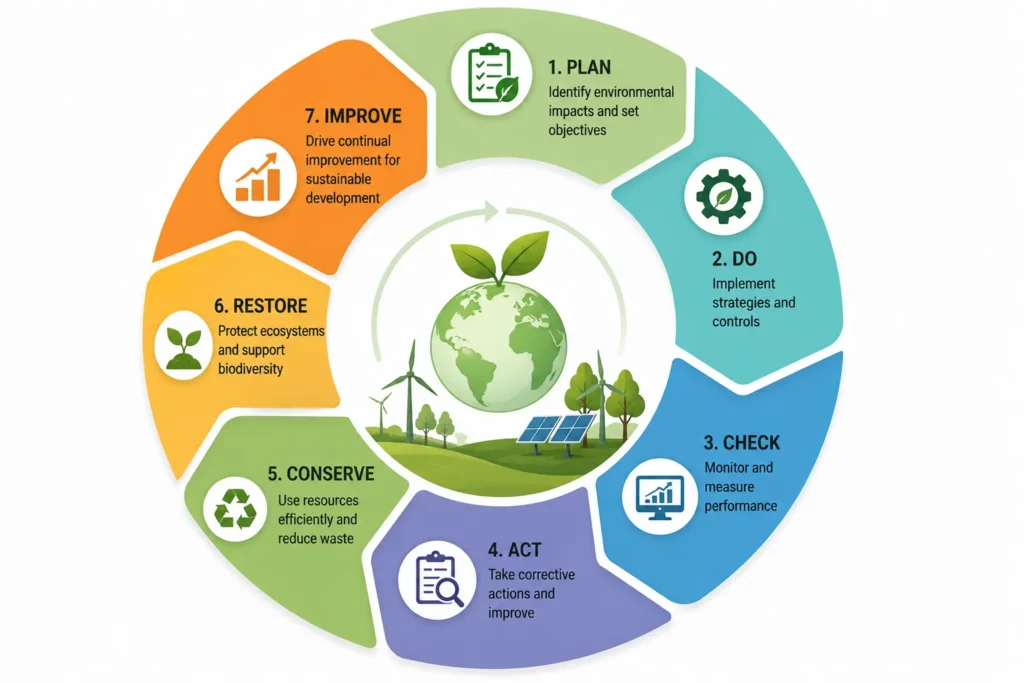
Environmental Manager Salary in the United States (2026)
| Experience Level | Annual Salary (USD) | Monthly Salary (USD) | Hourly Rate (Approx.) |
|---|---|---|---|
| Entry-Level (0–2 Years) | $91,471 | $7,623 | $43.98 |
| Mid-Level (3–7 Years) | $129,745–$134,435 | $10,812–$11,203 | $62.38–$64.63 |
| Senior-Level (8+ Years) | $147,570+ | $12,298+ | $70.95+ |
Frequently Asked Questions (FAQs)
Have questions about Environmental Management? Explore answers to some of the most frequently asked questions about environmental management principles, Environmental Management Systems (EMS), sustainability, environmental compliance, career opportunities, essential skills, industry applications, and the future of environmental management.