
What Is Environmental Engineering? A Complete Career Guide for 2026
Environmental engineering is one of the most important engineering disciplines in the modern world. As global populations grow, industries expand, and environmental challenges become increasingly complex, organisations and governments require skilled professionals who can develop sustainable solutions to protect natural resources, public health, and ecosystems. Environmental engineers play a vital role in addressing issues such as water pollution, air quality, waste management, climate change, renewable energy integration, and environmental sustainability.
In 2026, environmental engineering continues to be a high-demand profession, offering diverse career opportunities across public and private sectors. From designing advanced water treatment facilities to developing sustainable infrastructure and implementing environmental compliance programmes, environmental engineers contribute directly to creating a cleaner, healthier, and more sustainable future.
This comprehensive career guide explains what environmental engineering is, what environmental engineers do, the qualifications and skills required, career prospects, salary expectations, industry demand, and future trends shaping the profession.
What Is Environmental Engineering?
Environmental engineering is a branch of engineering that focuses on protecting human health and the environment by developing practical solutions to environmental challenges. It combines principles from civil engineering, chemical engineering, biology, chemistry, ecology, geology, and environmental science to address issues affecting air, water, land, and natural ecosystems.
The primary goal of environmental engineering is to minimise environmental impacts while supporting sustainable economic and industrial development. Environmental engineers design systems, technologies, and processes that reduce pollution, conserve resources, manage waste, improve water quality, and promote environmental sustainability.
Environmental engineering is concerned with both preventing environmental problems and finding innovative ways to solve existing challenges.
Why Is Environmental Engineering Important?
Environmental engineering plays a crucial role in ensuring that societies can grow and develop without causing irreversible damage to the environment.
Protecting Public Health
Environmental engineers develop systems that provide safe drinking water, effective wastewater treatment, and pollution control measures that protect communities from environmental hazards.
Supporting Sustainable Development
By promoting resource efficiency and environmentally responsible practices, environmental engineering helps balance economic growth with environmental protection.
Reducing Pollution
Environmental engineers design technologies and strategies that minimise air, water, and soil pollution from industrial, commercial, and municipal activities.
Addressing Climate Change
Environmental engineers contribute to climate change mitigation through renewable energy projects, carbon reduction initiatives, sustainable infrastructure, and environmental resilience planning.
Conserving Natural Resources
Environmental engineering supports the efficient use of water, energy, and raw materials, helping preserve resources for future generations.
What Does an Environmental Engineer Do?
Environmental engineers are responsible for identifying environmental problems, analysing risks, and developing practical solutions that comply with environmental regulations and sustainability objectives.
Typical responsibilities include:
- Designing water treatment and wastewater treatment systems
- Developing pollution prevention and control strategies
- Conducting environmental impact assessments
- Managing waste treatment and disposal projects
- Monitoring environmental performance and compliance
- Developing sustainability programmes
- Assessing environmental risks
- Supporting renewable energy and green infrastructure projects
- Advising organisations on environmental regulations
- Conducting environmental audits and inspections
Environmental engineers often work closely with scientists, regulators, contractors, urban planners, government agencies, and industry stakeholders.
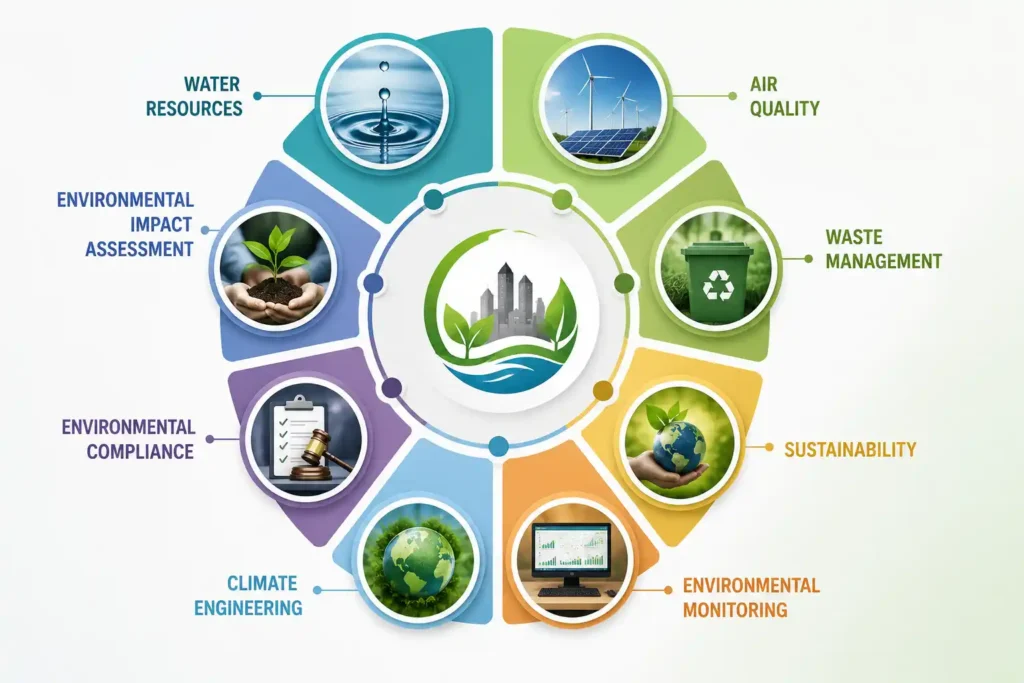
Key Areas of Environmental Engineering
Environmental engineering encompasses numerous specialisations that address different environmental challenges.
Water and Wastewater Treatment
Water treatment is one of the most critical areas of environmental engineering.
Environmental engineers design systems that:
- Treat drinking water
- Remove contaminants
- Manage wastewater
- Improve water quality
- Protect aquatic ecosystems
Typical projects include municipal water treatment plants, industrial wastewater facilities, desalination plants, and water recycling systems.
Air Pollution Control
Air quality management focuses on reducing emissions that affect human health and the environment.
Environmental engineers develop solutions such as:
- Emission control systems
- Air filtration technologies
- Industrial pollution control equipment
- Air quality monitoring programmes
These systems help industries comply with environmental regulations while reducing harmful pollutants.
Waste Management
Waste management involves the collection, treatment, recycling, and disposal of waste materials.
Environmental engineers work on:
- Recycling systems
- Landfill design
- Hazardous waste treatment
- Waste-to-energy technologies
- Circular economy initiatives
Environmental Impact Assessment (EIA)
Environmental impact assessments evaluate the potential environmental effects of proposed developments before projects begin.
Environmental engineers:
- Assess environmental risks
- Identify potential impacts
- Recommend mitigation measures
- Support regulatory approvals
EIAs are commonly required for infrastructure, industrial, energy, and construction projects.
Renewable Energy and Sustainability
Environmental engineers play a significant role in developing sustainable energy systems.
Areas include:
- Solar energy projects
- Wind energy systems
- Bioenergy facilities
- Energy efficiency programmes
- Sustainable infrastructure development
Climate Change Mitigation and Adaptation
Climate-related environmental engineering projects focus on:
- Carbon emission reduction
- Flood management
- Coastal protection
- Climate resilience planning
- Sustainable urban development
Skills Required to Become an Environmental Engineer
Successful environmental engineers combine technical expertise with problem-solving and communication abilities.
Technical Skills
Environmental engineers should possess knowledge of:
- Environmental regulations
- Water treatment technologies
- Waste management systems
- Air pollution control
- Environmental monitoring
- Sustainability principles
- Risk assessment methodologies
Analytical Skills
Environmental engineers must be able to:
- Interpret complex data
- Conduct environmental assessments
- Evaluate technical solutions
- Solve environmental challenges
Project Management Skills
Many environmental projects involve multiple stakeholders and strict regulatory requirements.
Important project management skills include:
- Planning
- Budget management
- Risk management
- Scheduling
- Resource allocation
Communication Skills
Environmental engineers frequently communicate with regulators, clients, communities, and project teams.
Strong communication skills support:
- Report writing
- Presentations
- Stakeholder engagement
- Technical documentation
Problem-Solving Skills
Environmental challenges often require innovative and sustainable solutions. Environmental engineers must be capable of developing practical approaches to complex issues.
How to Become an Environmental Engineer
There are several pathways into environmental engineering depending on educational background and career goals.
Step 1: Build a Strong Foundation in Science and Mathematics
Subjects such as:
- Mathematics
- Physics
- Chemistry
- Biology
- Environmental Science
provide essential knowledge for environmental engineering studies.
Step 2: Obtain Relevant Qualifications
Learners may pursue:
- Environmental Engineering Diplomas
- Professional Certifications
- Undergraduate Programmes
- Postgraduate Qualifications
- Specialist Environmental Training
Qualifications help develop technical knowledge and practical competencies required by employers.
Step 3: Gain Practical Experience
Practical experience is essential for career development.
Experience can be gained through:
- Internships
- Industrial placements
- Environmental projects
- Research activities
- Graduate programmes
Step 4: Develop Specialist Expertise
Environmental engineers often specialise in specific fields such as:
- Water resources engineering
- Waste management
- Environmental consultancy
- Air quality management
- Sustainability management
- Renewable energy systems
Step 5: Continue Professional Development
Environmental regulations, technologies, and sustainability practices continually evolve. Ongoing professional development helps engineers remain current and competitive.
Environmental Engineering Career Path
Environmental engineering offers diverse progression opportunities across multiple sectors.
Graduate Environmental Engineer
Graduate engineers support senior professionals and gain practical experience through project involvement.
Typical responsibilities include:
- Site inspections
- Environmental monitoring
- Data analysis
- Technical reporting
Environmental Consultant
Environmental consultants advise organisations on environmental performance and regulatory compliance.
Responsibilities include:
- Environmental assessments
- Sustainability strategies
- Compliance audits
- Environmental management systems
Project Environmental Engineer
Project engineers manage environmental aspects of infrastructure and industrial developments.
Responsibilities include:
- Project planning
- Environmental controls
- Stakeholder coordination
- Regulatory compliance
Senior Environmental Engineer
Senior engineers lead major projects and provide technical leadership.
Typical duties include:
- Team management
- Strategic planning
- Technical reviews
- Client engagement
Environmental Manager
Environmental managers oversee organisational environmental performance.
Responsibilities include:
- Sustainability programmes
- Environmental compliance
- Risk management
- Corporate environmental strategy
Director of Sustainability or Environmental Programmes
Senior leadership roles focus on developing long-term sustainability strategies and environmental governance frameworks.
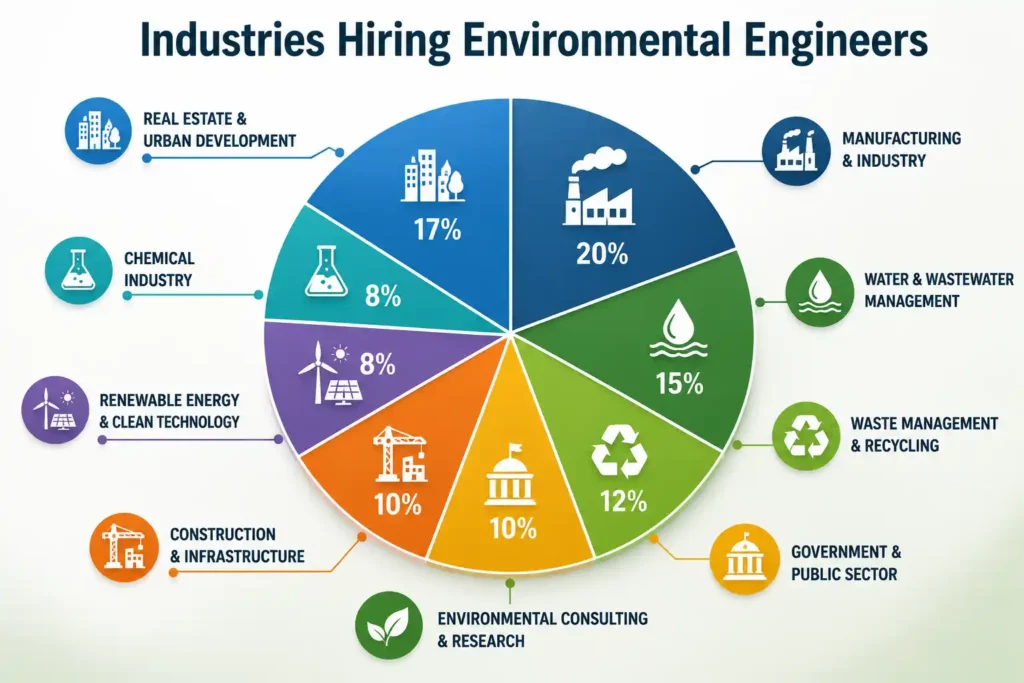
Industries That Hire Environmental Engineers
Environmental engineers are employed across numerous industries.
Government Agencies
Government departments employ environmental engineers to:
- Develop environmental policies
- Regulate environmental performance
- Support public infrastructure projects
Construction and Infrastructure
Environmental engineers help ensure construction projects meet environmental requirements and sustainability objectives.
Energy Sector
Environmental engineers support:
- Renewable energy projects
- Power generation facilities
- Carbon reduction programmes
Water Utilities
Water companies rely on environmental engineers to manage water treatment, wastewater systems, and resource conservation initiatives.
Manufacturing
Manufacturers employ environmental engineers to improve environmental performance and regulatory compliance.
Environmental Consultancy
Consultancy firms provide specialist environmental expertise to clients across multiple sectors.
Mining and Natural Resources
Environmental engineers help minimise environmental impacts associated with resource extraction activities.
Environmental Engineering Salary Expectations in 2026
Environmental engineering continues to offer strong earning potential, making it an attractive career choice for professionals interested in sustainability, environmental protection, and infrastructure development. Salaries vary depending on factors such as experience, qualifications, location, industry sector, and area of specialisation.
In 2026, environmental engineers can expect competitive salaries across all career stages. Entry-level professionals typically earn between $60,000 and $75,000 per year, while experienced environmental engineers and specialists can earn well over $120,000 annually. The overall salary range for environmental engineering professionals generally falls between $70,000 and $110,000, with the average salary reaching approximately $94,000 per year.
Professionals working in environmental consultancy, renewable energy, industrial sustainability, climate resilience, and environmental compliance often benefit from higher salary packages due to increasing global demand for their expertise.
| Career Level | Average Annual Salary |
|---|---|
| Entry-Level Environmental Engineer | $76,620 |
| Mid-Level Environmental Engineer | $94,092 |
| Senior Environmental Engineer | $123,312 |
| Top Earners (90th Percentile) | $127,500 – $143,300+ |
Environmental engineers who develop expertise in emerging fields such as climate change mitigation, ESG compliance, renewable energy systems, carbon management, and sustainable infrastructure are particularly well-positioned for career advancement and higher earning potential.
As governments and organisations continue investing in sustainability initiatives and environmental protection programmes, environmental engineering remains one of the most promising and financially rewarding engineering disciplines for 2026 and beyond.
Is Environmental Engineering in Demand?
Yes. Environmental engineering remains one of the fastest-growing engineering disciplines globally.
Several factors are driving demand:
- Climate change initiatives
- Net-zero commitments
- Environmental regulations
- Sustainable infrastructure investment
- Renewable energy development
- Water security concerns
- Corporate ESG programmes
Governments and organisations increasingly require environmental expertise to meet sustainability targets and regulatory obligations.
Future Trends in Environmental Engineering
Environmental engineering continues to evolve rapidly.
Artificial Intelligence (AI)
AI is transforming environmental monitoring, predictive analytics, and resource management.
Applications include:
- Pollution prediction
- Environmental data analysis
- Smart infrastructure management
- Automated monitoring systems
Smart Cities
Environmental engineers contribute to smart city initiatives through:
- Sustainable transport systems
- Smart water management
- Green infrastructure
- Energy-efficient urban planning
Carbon Reduction Technologies
Growing emphasis on carbon neutrality is creating opportunities in:
- Carbon capture
- Carbon accounting
- Energy efficiency
- Decarbonisation strategies
Circular Economy
The circular economy promotes resource reuse and waste reduction.
Environmental engineers support:
- Recycling innovations
- Resource recovery
- Sustainable product design
- Waste minimisation programmes
Climate Resilience
Future projects increasingly focus on helping communities adapt to climate-related risks such as flooding, droughts, and extreme weather events.
Is Environmental Engineering a Good Career?
Environmental engineering offers an excellent career choice for individuals interested in science, sustainability, innovation, and environmental protection.
Benefits include:
- Strong job demand
- Competitive salaries
- Diverse career opportunities
- Meaningful environmental impact
- Global employment prospects
- Continuous learning opportunities
- Contribution to sustainable development
As environmental challenges become more complex, the need for skilled environmental engineers will continue to grow, making it a rewarding and future-focused profession.
Conclusion
Environmental engineering is a dynamic and impactful engineering discipline dedicated to protecting the environment, improving public health, and supporting sustainable development. From water treatment and pollution control to climate change mitigation and renewable energy projects, environmental engineers help solve some of the world’s most pressing challenges.
As global sustainability priorities continue to expand, environmental engineering offers excellent career prospects, strong earning potential, and the opportunity to make a meaningful contribution to society. Whether you are considering a qualification, planning a career change, or exploring future opportunities, environmental engineering remains one of the most valuable and future-ready professions in 2026 and beyond.
Frequently Asked Questions (FAQs)
Have questions about Environmental Engineering? Explore answers to some of the most frequently asked questions about environmental engineering careers, responsibilities, qualifications, skills, salary expectations, industry demand, sustainability initiatives, and future career opportunities in 2026 and beyond.