
What Is Business Management? Complete Guide to Principles, Functions, Skills, Careers & Opportunities
What Is Business Management?
Business Management is the strategic process of planning, organising, directing, and controlling an organisation’s resources, including people, finances, operations, and technology, to achieve business objectives and create sustainable growth. It involves making effective decisions, developing strategies, improving performance, and ensuring that all areas of a business work together efficiently.
How Does Business Management Help Organisations Succeed?
Business management helps organisations succeed by providing a structured approach to planning, decision-making, resource management, and performance improvement. It ensures that businesses have clear goals, effective strategies, and well-organised processes that allow them to operate efficiently and respond to changing market conditions.
Effective business management helps companies use their resources wisely, including employees, finances, technology, and time. Through strong leadership, managers can build productive teams, improve workplace performance, reduce operational challenges, and create a culture focused on achieving business objectives.
Business management also supports long-term success by helping organisations identify opportunities, manage risks, and develop strategies for sustainable growth. By analysing market trends, improving customer value, and encouraging innovation, businesses can remain competitive in a constantly changing environment.
In modern organisations, successful business management connects every department and ensures that everyone works towards common goals. From improving daily operations to making important strategic decisions, effective management provides the foundation businesses need to grow, adapt, and achieve lasting success.
Why Is Business Management Important in Today’s Business World?
- Helps Organisations Achieve Clear Goals
Business management provides a structured approach to setting objectives, creating strategies, and ensuring all activities are aligned with business goals. - Improves Decision-Making
Effective management helps leaders analyse information, evaluate risks, and make informed decisions that support business growth and stability. - Optimises Resource Management
Business management ensures efficient use of important resources such as employees, finances, technology, and time to improve productivity. - Strengthens Leadership and Team Performance
Good management creates strong teams by improving communication, motivation, collaboration, and employee performance. - Supports Business Growth and Expansion
Strategic management helps organisations identify opportunities, overcome challenges, and develop plans for sustainable growth. - Improves Operational Efficiency
Business management helps businesses streamline processes, reduce waste, and improve the quality of products or services. - Creates Competitive Advantage
Effective managers help businesses adapt to market changes, understand customer needs, and stay ahead of competitors. - Encourages Innovation and Adaptability
Modern business management supports new ideas, technology adoption, and flexible strategies to respond to changing environments. - Helps Manage Risks and Challenges
Strong management practices allow organisations to identify potential problems and develop solutions before they affect business performance. - Builds a Positive Workplace Culture
Effective management promotes teamwork, employee engagement, and a healthy work environment that supports long-term success.
What Are the Main Principles of Business Management?
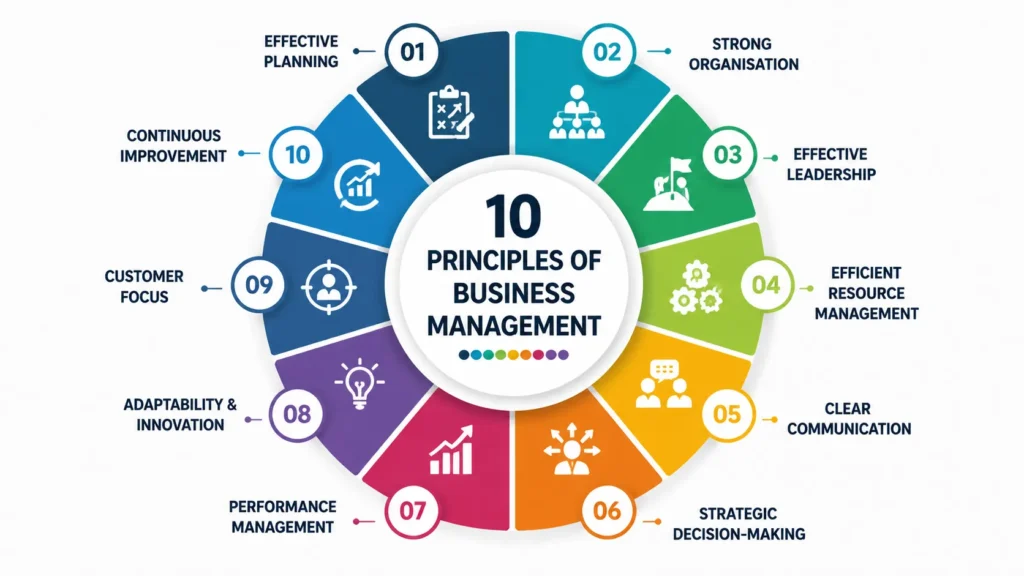
The main principles of business management provide a foundation for running organisations effectively and achieving long-term success. These principles guide managers in making decisions, managing resources, leading teams, and improving overall business performance.
1. Effective Planning
Planning is the foundation of successful business management. It involves setting clear objectives, developing strategies, identifying resources, and preparing actions to achieve organisational goals.
2. Strong Organisation
Organisation ensures that resources, tasks, and responsibilities are arranged properly. Effective managers create clear structures, assign roles, and coordinate activities to improve efficiency.
3. Effective Leadership
Leadership focuses on guiding, motivating, and supporting employees to achieve shared business objectives. Good leaders encourage teamwork, improve performance, and create a positive workplace environment.
4. Efficient Resource Management
Successful business management requires the effective use of resources, including employees, finances, technology, and materials. Proper resource management helps reduce waste and improve productivity.
5. Clear Communication
Communication is essential for smooth business operations. Managers must share information clearly, encourage feedback, and maintain strong connections between teams and departments.
6. Strategic Decision-Making
Business managers need to analyse information, evaluate risks, and make decisions that support organisational growth. Strategic decisions help businesses respond effectively to challenges and opportunities.
7. Performance Management
Monitoring and improving performance helps organisations achieve better results. Managers use feedback, evaluations, and improvement strategies to enhance employee and business performance.
8. Adaptability and Innovation
Modern businesses must adapt to changing markets, customer expectations, and technology. Effective management encourages innovation and flexible approaches to remain competitive.
9. Customer Focus
Successful organisations understand and meet customer needs. Business management focuses on improving products, services, and experiences to create customer satisfaction and loyalty.
10. Continuous Improvement
Continuous improvement encourages businesses to review processes, identify weaknesses, and make ongoing improvements. This principle helps organisations maintain quality and achieve sustainable growth.
How Does Business Management Differ from General Management?
Business management and general management are closely related concepts, but they focus on different areas of organisational success. Business management has a broader focus on achieving business objectives, improving competitiveness, and driving growth, while general management focuses mainly on coordinating daily operations and managing internal activities.
| Business Management | General Management |
|---|---|
| Focuses on overall business success, growth, and profitability. | Focuses on managing daily activities and maintaining smooth operations. |
| Involves areas such as strategy, marketing, finance, leadership, and business development. | Concentrates on planning, organising, staffing, directing, and controlling resources. |
| Looks at external factors such as market trends, competitors, customers, and business opportunities. | Mainly focuses on internal processes, teams, and operational efficiency. |
| Aims to create competitive advantage and long-term business growth. | Aims to maintain stability and achieve organisational objectives. |
| Often involves entrepreneurial thinking, innovation, and strategic decision-making. | Usually involves implementing plans, managing resources, and improving workflows. |
What Are the Main Functions of Business Management?
The main functions of business management are the key activities that help organisations operate effectively, achieve objectives, and maintain long-term success. These functions guide managers in planning strategies, managing resources, leading employees, and improving overall business performance.
1. Planning
Planning is the foundation of business management. It involves setting goals, analysing opportunities, creating strategies, and deciding the actions needed to achieve business objectives. Effective planning helps organisations prepare for challenges and make better decisions.
2. Organising
Organising involves arranging resources, responsibilities, and tasks in a structured way. Managers ensure that employees understand their roles, departments work together efficiently, and resources are used effectively to support business operations.
3. Staffing and Human Resource Management
Staffing focuses on recruiting, selecting, training, and developing employees who have the right skills for business needs. Effective workforce management helps organisations build capable teams and improve productivity.
4. Leading and Directing
Leadership involves guiding, motivating, and supporting employees to achieve organisational goals. Managers use communication, teamwork, and leadership skills to create a positive work environment and encourage better performance.
5. Controlling
Controlling involves monitoring business performance, measuring results, identifying problems, and making improvements where necessary. This function helps ensure that business activities remain aligned with planned objectives.
6. Decision-Making
Decision-making is an essential function of business management. Managers analyse information, evaluate risks, and choose the best solutions to improve operations and achieve business goals.
7. Resource Management
Business managers are responsible for managing important resources, including finances, employees, technology, and materials. Efficient resource management helps reduce waste and improve business efficiency.
8. Strategic Management
Strategic management focuses on developing long-term plans that help businesses grow and remain competitive. It involves analysing market conditions, identifying opportunities, and creating strategies for future success.
9. Communication Management
Effective communication ensures that information flows smoothly between teams, departments, and stakeholders. Clear communication improves coordination, reduces misunderstandings, and supports better workplace performance.
10. Performance Improvement
Business management focuses on continuously improving processes, productivity, and service quality. Managers review performance, identify areas for improvement, and implement changes to achieve better results.
What Skills Are Required for Successful Business Management?
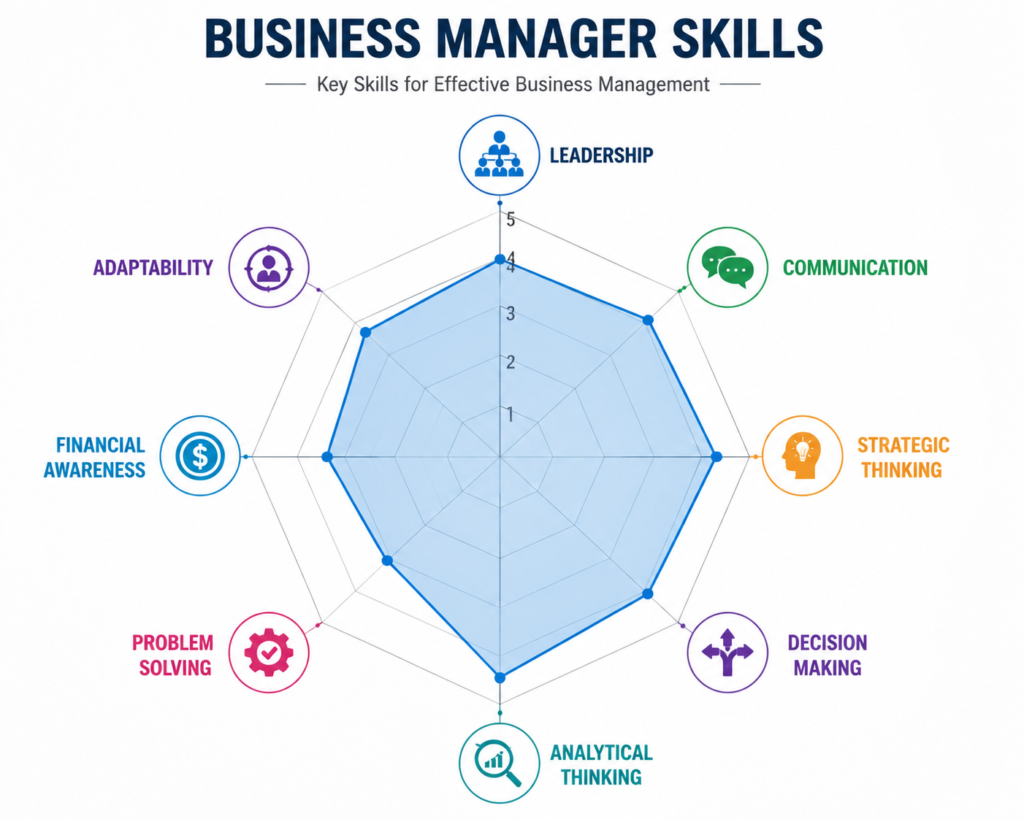
Successful business management requires a combination of strategic thinking, leadership ability, communication skills, and practical decision-making. Effective managers need the ability to understand business challenges, guide teams, manage resources, and create strategies that help organisations achieve their goals.
1. Leadership Skills
Strong leadership skills help managers guide teams, motivate employees, and create a positive working environment. Effective leaders inspire confidence, encourage collaboration, and help employees perform at their best.
2. Communication Skills
Clear communication is essential for successful business management. Managers must be able to share ideas, provide instructions, listen to feedback, and build strong relationships with employees, customers, and stakeholders.
3. Strategic Thinking
Strategic thinking allows managers to analyse business situations, identify opportunities, and develop plans for long-term success. It helps organisations adapt to market changes and maintain competitiveness.
4. Decision-Making Skills
Business managers regularly make important decisions that affect operations and growth. Strong decision-making skills help them evaluate information, manage risks, and choose effective solutions.
5. Problem-Solving Skills
Managers must be able to identify challenges and find practical solutions. Problem-solving skills help businesses overcome obstacles, improve processes, and maintain smooth operations.
6. Financial Management Skills
Understanding financial concepts helps managers control budgets, analyse costs, and make responsible business decisions. Financial awareness supports better resource management and business performance.
7. Time Management Skills
Effective time management helps managers prioritise tasks, meet deadlines, and ensure important business activities are completed efficiently.
8. Team Management Skills
Successful managers know how to build, support, and develop strong teams. Team management skills improve collaboration, employee engagement, and workplace productivity.
9. Adaptability and Flexibility
Modern businesses constantly change due to technology, customer expectations, and market conditions. Adaptability helps managers respond quickly and develop effective strategies in changing environments.
10. Analytical Skills
Analytical skills help managers understand data, evaluate performance, and make informed decisions. These skills support better planning and continuous business improvement.
Why Is Problem-Solving Important for Business Managers?
Problem-solving is an essential skill for business managers because organisations regularly face challenges related to operations, employees, customers, finances, and market changes. Effective managers must identify problems quickly, analyse possible solutions, and take the right actions to keep the business moving forward.
Strong problem-solving abilities help managers make better decisions and prevent small issues from becoming larger problems. By evaluating situations carefully and using logical thinking, managers can reduce risks, improve processes, and maintain business efficiency.
Business managers also use problem-solving skills to handle unexpected challenges, such as changes in customer demands, workplace conflicts, resource limitations, or competitive pressures. The ability to find practical solutions allows organisations to adapt and remain successful in changing environments.
Problem-solving also encourages innovation and continuous improvement. Managers who focus on solutions can identify opportunities to improve products, services, teamwork, and operational performance. This creates a culture where challenges are viewed as opportunities for growth.
In modern business environments, effective problem-solving helps managers lead with confidence, support their teams, and make decisions that contribute to long-term organisational success. It is a key skill that enables businesses to overcome obstacles and achieve their objectives.
What Jobs Are Available in Business Management?
Business management offers a wide range of career opportunities across different industries because every organisation needs professionals who can manage operations, lead teams, and support business growth. The roles available depend on experience, skills, and the area of business a professional chooses to work in.
1. Business Manager
A Business Manager oversees daily operations, develops strategies, manages resources, and ensures that business objectives are achieved. They coordinate different departments and support overall organisational performance.
2. Operations Manager
Operations Managers focus on improving business processes, managing workflows, and ensuring that products or services are delivered efficiently. They help organisations increase productivity and maintain quality standards.
3. Project Manager
Project Managers plan, organise, and deliver business projects within set timelines and budgets. They coordinate teams, manage resources, and ensure projects meet organisational goals.
4. Business Development Manager
Business Development Managers identify growth opportunities, build relationships with clients, and develop strategies to increase business revenue and market presence.
5. Marketing Manager
Marketing Managers create strategies to promote products and services, understand customer needs, and improve brand visibility. They use market research to support business growth.
6. Human Resource Manager
HR Managers manage employee-related activities, including recruitment, training, workplace policies, and employee development. They help organisations build strong and productive teams.
7. Sales Manager
Sales Managers lead sales teams, develop sales strategies, manage customer relationships, and work towards achieving business revenue targets.
8. Financial Manager
Financial Managers oversee budgeting, financial planning, reporting, and resource management to support effective business decisions.
9. Administrative Manager
Administrative Managers coordinate office operations, improve organisational systems, and ensure smooth daily business activities.
10. Entrepreneur or Business Owner
Business management skills are valuable for individuals who want to start and manage their own businesses. These skills help entrepreneurs plan strategies, manage resources, and grow successful ventures.
Is Business Management a Good Career Choice?
Yes, business management is a strong career choice because businesses across all industries need skilled professionals who can manage operations, lead teams, solve problems, and support organisational growth. As companies continue to face changing markets, new technologies, and increasing competition, the demand for effective business managers remains important.
A career in business management offers opportunities to work in a wide range of sectors, including finance, healthcare, technology, retail, construction, manufacturing, and professional services. This flexibility allows professionals to explore different career paths based on their interests and skills.
Business management also helps individuals develop valuable skills such as leadership, communication, strategic planning, decision-making, and problem-solving. These skills are transferable and useful in many professional roles, making business management knowledge valuable in today’s workplace.
Another advantage of choosing business management is the variety of career opportunities available. Professionals can work in roles such as business manager, operations manager, project manager, marketing manager, HR manager, or business development specialist.
In a competitive business environment, organisations need people who can understand challenges, improve performance, and create effective strategies. For individuals who enjoy leading teams, making decisions, and contributing to business success, business management can provide a rewarding and flexible career path.
What Industries Use Business Management?
Business management is used across almost every industry because organisations need skilled professionals to plan operations, manage resources, improve performance, and achieve business objectives. From small businesses to global companies, effective management plays an important role in maintaining efficiency and supporting growth.
1. Finance and Banking
The finance sector relies on business management professionals to manage operations, improve customer services, develop strategies, and ensure effective use of financial resources.
2. Healthcare
Healthcare organisations use business management to coordinate services, manage teams, improve operational efficiency, and deliver better patient experiences while maintaining effective administration.
3. Technology and IT
Technology companies require business managers to oversee projects, manage innovation, coordinate teams, and develop strategies that support digital growth and market competition.
4. Retail and E-Commerce
Retail businesses use management skills to control operations, understand customer behaviour, manage supply chains, and improve sales performance.
5. Construction and Engineering
Construction companies rely on business management for project planning, resource allocation, cost control, team coordination, and successful project delivery.
6. Manufacturing
Manufacturing organisations use business management to improve production processes, manage resources, maintain quality, and increase operational efficiency.
7. Hospitality and Tourism
Hotels, restaurants, and tourism businesses require managers to oversee daily operations, customer service, staff performance, and business development.
8. Education and Training
Educational institutions use business management principles to manage administration, resources, strategic planning, and organisational improvement.
9. Logistics and Supply Chain
Logistics companies depend on business management to improve transportation processes, manage resources, optimise supply chains, and meet customer demands.
10. Professional Services
Consulting firms, marketing agencies, and other professional organisations use business management to manage clients, teams, projects, and business growth strategies.
Future Trends in Business Management
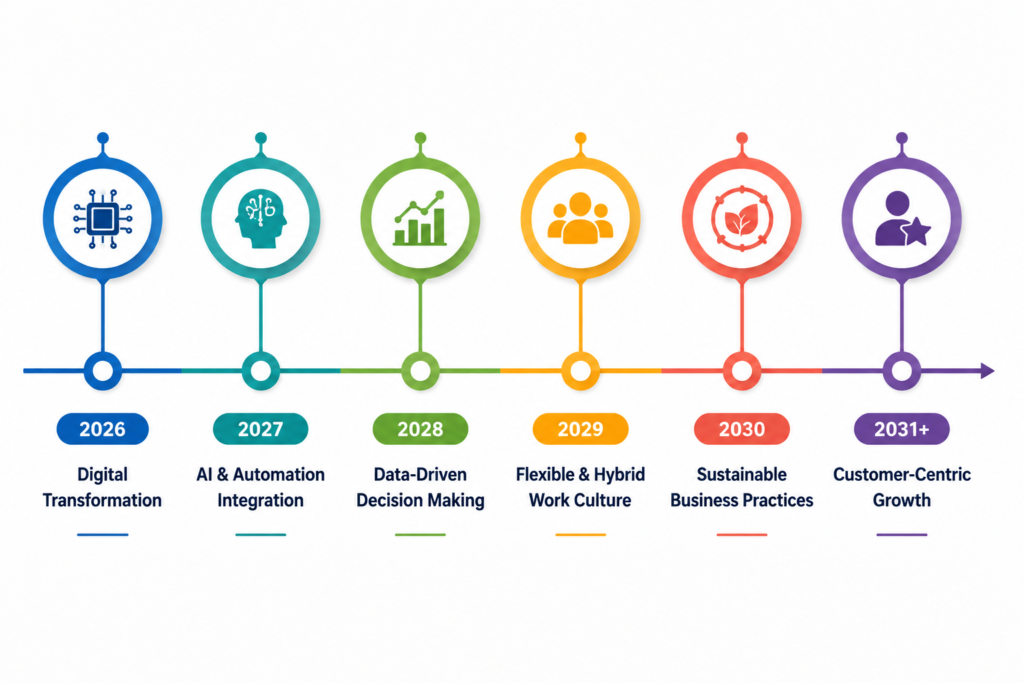
The future of business management is being shaped by rapid technological advancements, changing customer expectations, and evolving workplace practices. Modern organisations are moving beyond traditional management approaches and adopting smarter, more flexible strategies to remain competitive. Business managers of the future will need to combine leadership skills with innovation, data awareness, and the ability to adapt to continuous change.
1. Digital Transformation and Technology Integration
Technology will continue to transform how businesses operate and make decisions. Business managers are increasingly using digital tools, automation, cloud systems, and advanced software to improve productivity, streamline processes, and enhance customer experiences.
Future managers will need to understand how technology can support business goals and improve operational efficiency.
2. Data-Driven Decision-Making
Businesses are becoming more dependent on data to make accurate decisions. Managers will increasingly use business analytics, performance reports, and market insights to identify opportunities, manage risks, and improve strategies.
Data-driven management helps organisations make decisions based on evidence rather than assumptions.
3. Artificial Intelligence in Business Operations
Artificial intelligence (AI) is changing areas such as customer service, forecasting, marketing, and workflow management. Business managers will use AI-powered solutions to improve efficiency, automate repetitive tasks, and support better decision-making.
The ability to work alongside AI technologies will become an important management skill.
4. Focus on Employee Experience and Workplace Culture
Modern businesses are placing greater importance on employee satisfaction, engagement, and well-being. Future business managers will focus on creating positive workplace cultures that encourage collaboration, creativity, and productivity.
Strong employee relationships will remain a key factor in organisational success.
5. Sustainable Business Practices
Sustainability is becoming an important part of business strategy. Organisations are focusing on responsible resource use, ethical practices, and environmentally conscious operations.
Future managers will need to consider sustainability when making business decisions and developing long-term strategies.
6. Remote and Hybrid Work Management
Flexible working models have changed how organisations manage teams. Business managers must develop new approaches to communication, collaboration, performance monitoring, and team engagement in remote and hybrid environments.
Effective digital leadership will become increasingly important.
7. Agile Management Approaches
Businesses need to respond quickly to market changes, customer needs, and industry challenges. Agile management allows organisations to adapt faster, improve processes, and encourage innovation.
Future managers will focus on flexibility, continuous improvement, and rapid problem-solving.
8. Customer-Centred Business Strategies
Customer expectations are constantly increasing, and businesses must focus on delivering better experiences. Managers will use customer insights, personalised services, and improved communication strategies to build stronger relationships.
Understanding customer needs will remain essential for business growth.
9. Global Business Management
Businesses are becoming more connected across international markets. Future managers will need skills in managing diverse teams, understanding global markets, and adapting strategies for different regions.
Global awareness will help organisations compete successfully worldwide.
10. Continuous Skill Development
The business environment is changing quickly, making continuous learning essential for managers. Professionals will need to regularly improve their leadership, technology, communication, and strategic thinking skills to remain effective.
Business Management Salary by Job Role (UK 2026)
| Job Role | Average Salary Range |
|---|---|
| Business Administrator | £30,000 – £40,000 |
| Business Analyst | £40,000 – £60,000 |
| Operations Manager | £45,000 – £70,000 |
| Business Development Manager | £45,000 – £75,000 |
| Project Manager | £45,000 – £70,000 |
| Business Manager | £50,000 – £70,000 |
| Senior Business Manager | £70,000 – £90,000+ |
| Business Director | £90,000+ |
Frequently Asked Questions (FAQs)
Have questions about Business Management? Explore answers to some of the most frequently asked questions about Business Management careers, responsibilities, qualifications, skills, salary expectations, industry demand, sustainability initiatives, and future career opportunities in 2026 and beyond.
ger, Sales Manager, Financial Manager, Administrative Manager, and Entrepreneur