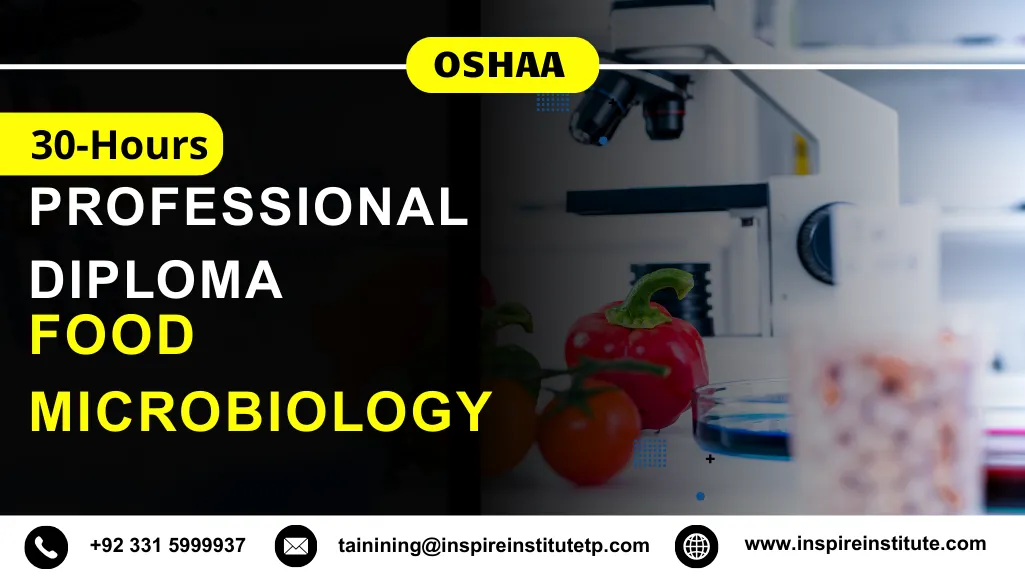
OSHAA 30-Hours Professional Diploma in Food Microbiology

Overview

Certifying Body

OSHAA

Total Credits

30 HOURS

Evaluation

Assignments Based

Course Category

Food Safety

Learning Mood

Online

Qualification Structure

The study units below explain what learners will study and the learning outcomes they are expected to achieve.


  • Understand the fundamental concepts and scope of food microbiology
  • Recognise the importance of microbiology in food safety and public health
  • Identify the key OSHA regulations relevant to food industry settings
  • Explain the role of occupational safety in microbiological risk prevention
  • Differentiate between various types of microorganisms affecting food
  • Describe the structure and functions of bacteria, viruses, yeasts, and moulds
  • Identify beneficial and harmful microorganisms in food products
  • Understand taxonomy and nomenclature used in food microbiology
  • Identify common sources of foodborne pathogens in the food chain
  • Understand how pathogens are transmitted through food handling and processing
  • Recognise high-risk practices and environments for contamination
  • Evaluate strategies to prevent the introduction and spread of pathogens
  • Explain the conditions that promote or inhibit microbial growth
  • Understand intrinsic and extrinsic factors influencing microbial survival
  • Identify key methods for controlling microbial populations in food
  • Apply knowledge of microbial ecology to food safety practices
  • Recognise signs and causes of microbial food spoilage
  • Understand the effects of spoilage on food quality and safety
  • Identify traditional and modern preservation techniques
  • Evaluate the effectiveness of preservation methods in inhibiting spoilage
  • Analyse real-life outbreaks and identify causative organisms
  • Understand the symptoms and health impacts of foodborne illnesses
  • Evaluate the risk factors contributing to contamination and disease spread
  • Apply critical thinking to assess preventative and corrective measures
  • Understand standard microbiological sampling techniques in food environments
  • Identify appropriate tools and procedures for collecting samples
  • Learn key laboratory methods for detecting and identifying microorganisms
  • Interpret test results to inform food safety decision-making
  • Understand the seven principles of the HACCP system
  • Identify critical control points in food processing and handling
  • Develop hazard analysis and implement monitoring procedures
  • Evaluate the effectiveness of HACCP plans in maintaining food safety
Entry Requirements

Entry Requirements

  • Minimum age of 18 years at the time of enrollment.
  • Completion of secondary education (high school diploma or equivalent) is required.
    Candidates with a background in biology, food science, or related fields will be given preference.
  • At least 6 months of experience in food handling, laboratory work, supermarkets, grocery stores, or food-related industries is recommended.
  • Applicants must demonstrate basic proficiency in English (reading, writing, and speaking).

What You Need to Know

The OSHAA 30-Hours Professional Diploma in Food Microbiology is designed for food safety officers, microbiology students, quality assurance professionals, supermarket and grocery store managers, and anyone working in food production, storage, or retail who wants to strengthen their knowledge of foodborne microorganisms and contamination control.

This diploma provides specialized training in food microbiology, equipping you with practical skills to identify, prevent, and manage microbial risks in food systems. It enhances your professional credibility, ensures compliance with international food safety standards, and prepares you to safeguard consumer health.

  • Comprehensive understanding of foodborne pathogens, spoilage organisms, and microbial testing methods
  • Practical knowledge to improve hygiene, safety, and quality in food handling and storage
  • Recognition as a trained professional in food microbiology and safety
  • Enhanced employability and career advancement in the food industry

Graduates can pursue roles such as Food Microbiologist, Quality Assurance Specialist, Food Safety Officer, Laboratory Technician, or Compliance Manager in food manufacturing, retail, and regulatory organizations.

Learners can advance to higher-level diplomas or certifications in food safety, microbiology, or occupational health, and may progress into leadership positions in food quality management or research.

Yes. The OSHAA 30-Hours Professional Diploma in Food Microbiology is internationally recognised, making it valuable for professionals seeking career opportunities across global food industries and regulatory bodies.

Apply for This Course

Similar Posts